

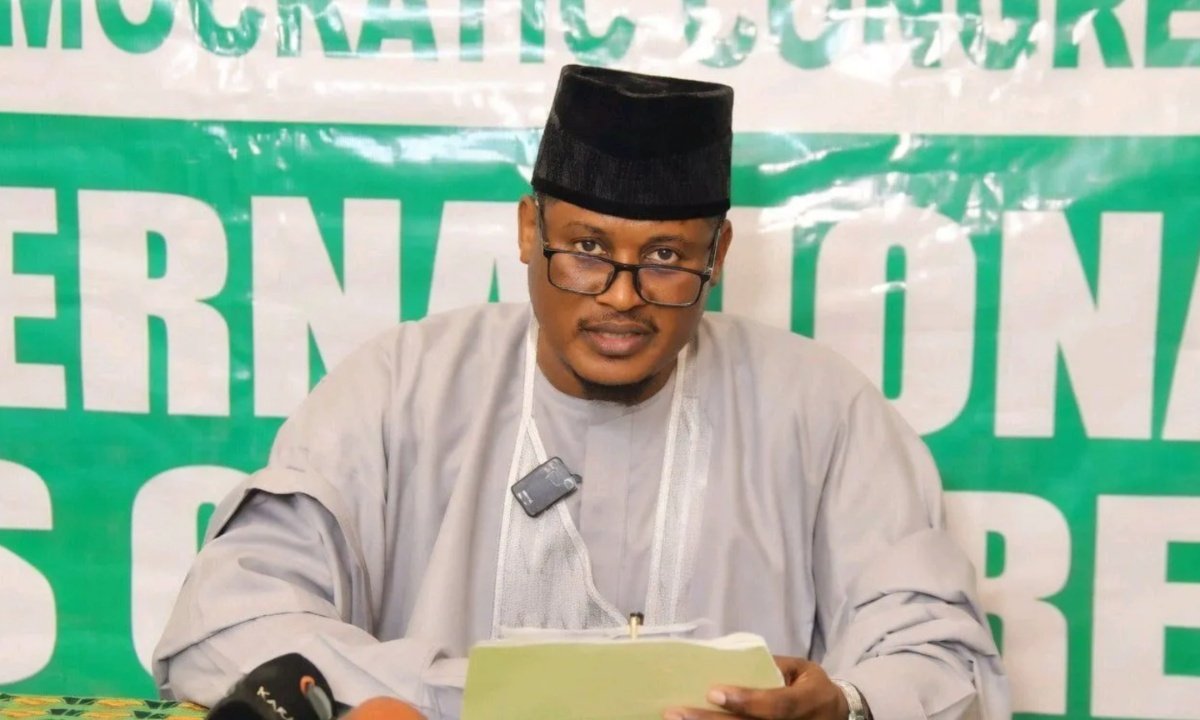
Nafiu Bala Gombe, a factional leader of the African Democratic Congress, ADC, has defended his decision to pursue the party’s leadership dispute in court, insisting that political popularity and financial influence should not place anyone above the law.
Speaking on why the names of Atiku Abubakar and David Mark remained on the Independent National Electoral Commission, INEC, portal, Bala said the commission would take appropriate action once it received the certified copy of the court judgment.
He rejected claims that INEC was deliberately delaying the process, suggesting that the commission might not have received the official court documents.
“I went to court with only the Constitution. I told the world that if they had followed the right procedures, the court should rule in their favour. But if we were right, we should be given our rights,” he said.
He argued that popularity, political connections and financial resources were no reasons to disregard the law, warning that the country could not make meaningful progress if influential people were allowed to operate outside established rules.
The factional leader further accused some individuals involved in the dispute of circulating false documents claiming he had resigned from his position. He described the reports as misleading.
On his relationship with Atiku, Bala said he regarded the former vice-president as a father figure because they both came from the same geopolitical zone.
However, he expressed disappointment that Atiku had not personally reached out to him despite the prolonged crisis, while some party members continued to portray him as an enemy of the ADC.
Bala disclosed that his faction had directed all its aspirants to continue their campaigns ahead of the 2027 general elections.
He also appealed to members of the opposing faction to exercise patience, respect the judicial process and complete their membership registration in their respective wards in accordance with the party’s constitution.
Addressing concerns about the source of his faction’s funding, Bala said it relied mainly on membership dues and contributions generated through its internal activities.
He also defended his security arrangements and lifestyle, arguing that he had the same right to personal protection as other prominent politicians.
He added that he was a businessman with other sources of income.
Bala advised Nigerian youths to respect the law and avoid being used to fuel political confrontations, stressing that disagreements should be resolved through democratic institutions rather than violence.