

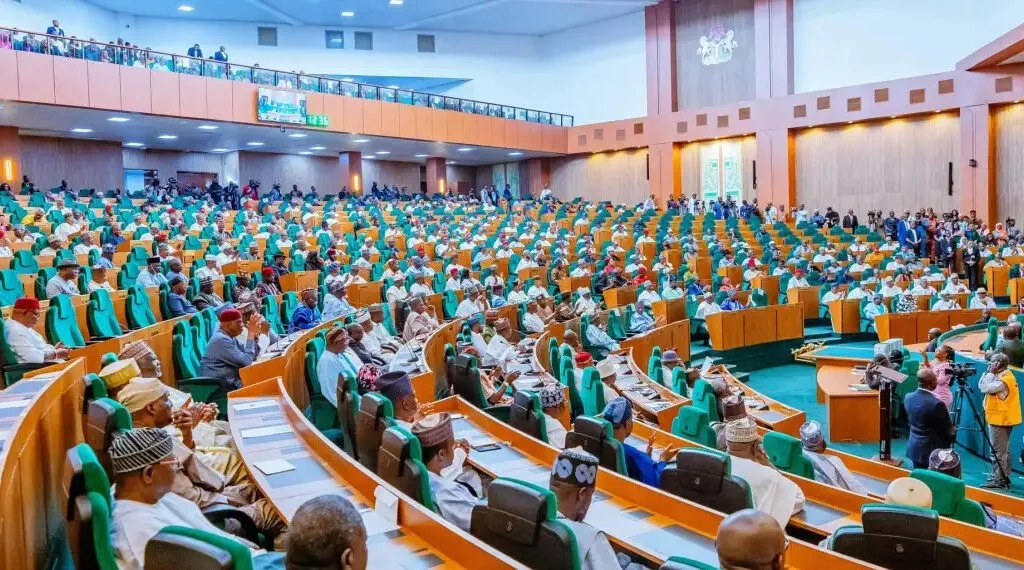
The House of Representatives on Thursday constituted an Ad-hoc Committee to investigate rising cases of political violence across the country ahead of the 2027 general elections, amid growing concerns over attacks on political gatherings, supporters and campaign activities.
The resolution followed the adoption of a motion of urgent public importance on the need to arrest rising violence during political campaign activities, sponsored by the Minority Leader, Hon. Fred Agbedi; the Chairman of the House Committee on Public Accounts, Rep. Bamidele Salam; and 15 other lawmakers.
Leading the debate, Hon. Agbedi expressed concern over the increasing incidents of violence and disruption of political activities in different parts of the country, warning that the development posed a serious threat to democratic participation and the credibility of the 2027 electoral process.
He cited Section 40 of the 1999 Constitution (as amended), which guarantees every person’s right to assemble freely and associate with others, including the right to form or belong to a political party, stressing that citizens must be allowed to participate in lawful political activities without fear of intimidation or attack.
He also recalled Section 14(2)(b) of the Constitution, which provides that the security and welfare of the people shall be the primary purpose of government, while noting that Section 88(1) empowers the National Assembly to investigate matters within its legislative competence and the conduct of public authorities responsible for administering laws.
Among the incidents highlighted were the disruption of political meetings in Enugu State on 12 September 2026, where police reportedly confirmed that two attendees were injured and one allegedly killed; and the 28 October attack on APC supporters travelling to a rally in Katsina State, following which 14 suspects were reportedly arrested.
The Bayelsa lawmaker also cited violence at an APC rally in Lafia, Nasarawa State, on 4 November, where several people were reportedly injured, as well as a violent incident during a political procession in Asaba, Delta State, on 7 November, which the police said left one person dead and five others injured. Calabar, Cross River State, was also mentioned among locations affected by political violence.
Expressing further concern, the Minority Leader warned that attacks, intimidation and destruction of property associated with political activities could result in more deaths and injuries, discourage citizens from participating in democratic processes and erode public confidence in the electoral system.
Worried by the development, the House consequently condemned all acts of violence, intimidation, assault and destruction of property connected with political rallies, processions, meetings and other lawful political activities, irrespective of the political party or individuals affected.
The lawmakers also called on political parties, candidates and their supporters to reject inflammatory rhetoric, discourage violence and cooperate with security agencies to maintain public peace, stressing that allegations of responsibility for the reported incidents must be established through impartial, thorough and evidence-based investigations.
To this end, the House constituted an Ad-hoc Committee to be chaired by the Majority Leader, with the Minority Leader as Deputy Chairman. The chairmen and deputy chairmen of the joint Committees on Police Affairs and National Security and Intelligence, alongside two members drawn from each of the committees, will serve as members.
The Ad-hoc Committee, which comprises lawmakers drawn from the ruling and opposition parties, was mandated to investigate the immediate and remote causes of political violence across the country, examine the circumstances surrounding the reported incidents and submit its findings and recommendations to the House within two weeks for further legislative action.
WATCH TOP VIDEOS FROM NIGERIAN TRIBUNE TV