

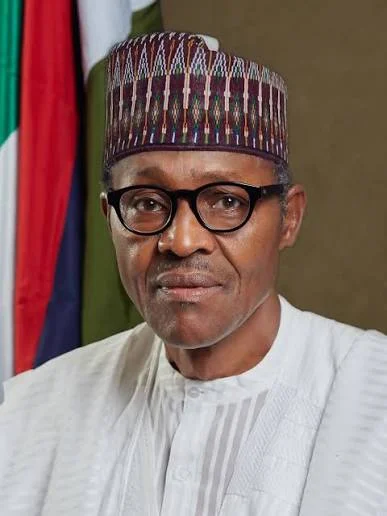
President Bola Tinubu, former President Goodluck Jonathan and former Niger Republic President Mahamadou Issoufou are expected to jointly preside over the public presentation of ‘Muhammadu Buhari: The Authorised Biography,’ a three-volume work on the life and presidency of the late President Muhammadu Buhari, on Thursday, November 19, at the Nigerian Army Conference Centre and Suites, Abuja.
Chairman of the Planning Committee, Suleiman Adamu, made the disclosure on Wednesday at a press conference in Abuja.
He said, “The event will be chaired by a former president of the Republic of Niger, His Excellency Mahamadou Issoufou, chairing the public presentation on 19 November 2026, and the chief presenter is also a former president of the Federal Republic of Nigeria, His Excellency Dr Goodluck Jonathan.
“And we’re also expecting the current president, His Excellency Bola Tinubu, to be present as guest of honour.
“All these we are expecting to be a public presentation, and as I had said, we are expecting people from across all political parties, from across all political parties.”
He stressed that the occasion was deliberately designed to transcend political boundaries.
“We are inviting everyone across the board, across parties. It is not an APC or an ABC or a political party event.
“All Buhari’s friends, associates, those in government, those in the opposition, these are people who have interacted significantly with him at various stages, and much of this is also captured in the work,” he stated.
The three volumes titled ‘Buhari: The Phenomenon,’ ‘Buhari: The Presidency’ and ‘Buhari: The Reckoning ‘ were written by the Chief biographer and Founder of May Publishing Limited, Dr Udu Yakubu.
They contain forewords by Issoufou, former Heads of State, Gen.Yakubu Gowon and Gen. Abdulsalami Abubakar.
Yakubu, who also addressed the press conference, described the work as an exercise in historical accounting rather than tribute or prosecution.
He explained, “The Reckoning is intended neither as condemnation nor vindication.
“It signifies historical accounting: what was attempted, what was achieved, what remained unresolved and what Buhari’s long engagement with power ultimately contributed to Nigeria’s political history.”
Yakubu said the biography was authorised by Buhari during his lifetime and developed through sustained interviews with the late President, as well as with individuals who worked with, opposed or advised him across the five decades of his public career.
He argued that the authorisation did not mean deference, saying, “The subject has had his voice in the biography, while the biographer has had or retained his independence.”
According to details obtained by our correspondent, the first volume traces Buhari’s origins in Daura through his military career, his emergence as Head of State in 1983, his overthrow in 1985, years in political opposition and eventual election as a civilian president in 2015.
The second examines the eight years of his administration from 2015 to 2023.
The third volume assesses his legacy across security, the economy, infrastructure, anti-corruption, governance, foreign affairs and national cohesion.
The biography, Yakubu said, seeks neither to canonise nor to prosecute Buhari but to place his life and record within the institutional, political and historical circumstances in which they unfolded.
He stated, “My task was not to decide in advance which Buhari should survive.
“It was to recover as much of the life as possible and allow evidence, chronology, circumstance and consequence to do their work.”
The work traces Buhari’s public career that spanned more than half a century, from his childhood in Daura through his military formation, participation in the Nigerian Civil War, service as military governor and federal commissioner, emergence as Head of State in December 1983, his overthrow in August 1985, years of political marginalisation, four presidential bids and eventual election as a civilian president in 2015.
He served two terms before leaving office in May 2023 and died later that year.
Recalling the effect of Buhari’s death on the project, Yakubu said he resisted the temptation to soften judgement.
“The temptation to soften judgement after death had to be resisted just as firmly as the temptation to become harsher because the subject could no longer respond.
“Buhari’s death did not convert this biography into a memorial work. There are passages that recognise achievement.
“There are others that examine failure. Some will please his admirers. Others will make them uncomfortable. The same will be true for his critics,” he explained.
The author added that the work was not intended to settle the debate over Buhari’s legacy.
He stated, “No serious biographer should present these volumes as the final word. The Buhari period remains close to us.
“Some records remain unavailable. Many participants are still active. New evidence will emerge. Biography enters an argument. It does not close it.”
Yakubu called on universities, libraries, research institutions, military establishments, public agencies and diplomatic missions to acquire the volumes and make them available to students, researchers and future generations.