

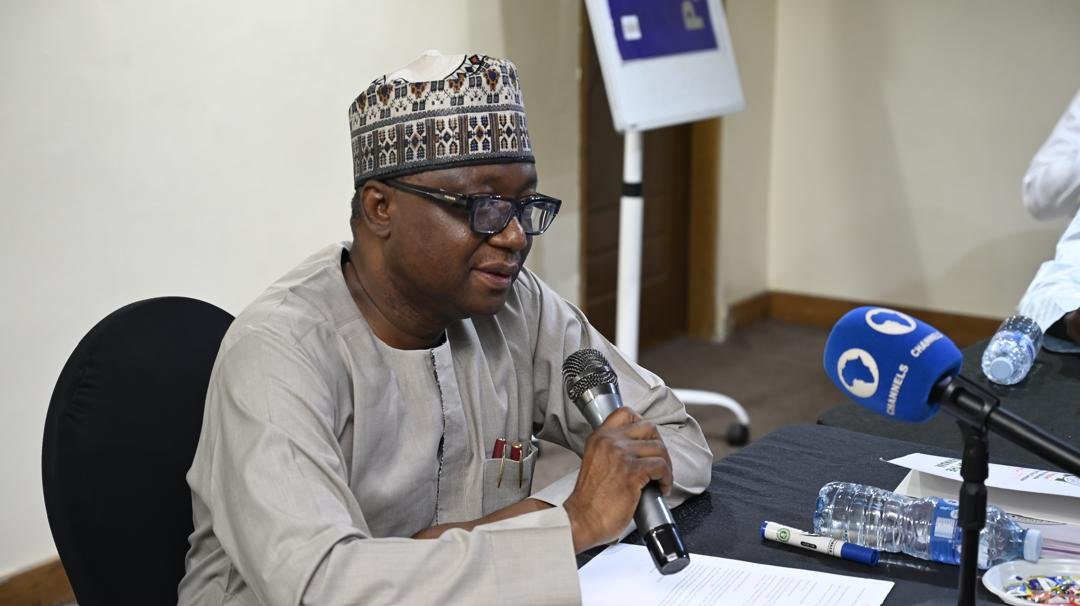
The Chairman of the Revenue Mobilisation, Allocation and Fiscal Commission (RMAFC), Dr Mohammed Bello Shehu, OFR, has called for a sustainable, transparent and predictable funding framework for Nigeria’s diplomatic missions abroad, as he chaired the inaugural meeting of the Presidential Technical Working Group on the Review of Funding Arrangements for the country’s foreign missions.
Speaking at the Commission’s headquarters in Abuja on Tuesday, Dr Shehu expressed profound appreciation to President for the timely intervention, noting that the President was particularly committed to finding a lasting solution to the problem.
Emphasising the President’s expectations, the RMAFC Chairman stated that, “Mr President is very passionate about this exercise. So he expects us to come up with something workable that can be implemented and that can solve this problem once and for all.” He consequently charged members of the Working Group to approach the assignment with a clear sense of purpose and commitment to producing recommendations that would translate into practical policy outcomes.
ALSO READ: Study suggests exercise may help reduce risk of macular degeneration
According to a statement by Maryam Umar Yusuf, the Chairman explained that these missions serve as critical platforms for protecting the interests and welfare of Nigerians abroad, strengthening bilateral and multilateral relations, advancing trade and investment, and projecting the dignity and aspirations of the country.
He cautioned that their capacity to discharge these responsibilities should not be undermined by recurrent uncertainty in the provision and administration of essential resources.
The statement noted that the Chairman noted that the commission’s concern arose from observations during official study engagements and interactions with personnel of Nigerian missions in several countries, which highlighted the operational consequences of funding constraints and the need for a more dependable institutional response.
Situating RMAFC’s involvement within its constitutional mandate, Dr Shehu cited Paragraph 32(c), Part I of the Third Schedule to the 1999 Constitution of the Federal Republic of Nigeria (as amended), which empowers the Commission to advise the Federal and State Governments on fiscal efficiency and methods of increasing revenue. He stressed that the Commission’s intervention was intended to complement, and not to encroach upon, the statutory responsibilities of other institutions.
“Rather, we seek to complement these responsibilities by bringing together the necessary fiscal, administrative and operational expertise in pursuit of a common national objective,” he stated.
The statement further stated that Chairman disclosed that the presidential directive of October 14, 2026, mandates the Working Group to undertake a comprehensive fiscal and technical review and submit its report, together with a programme of action for implementation, not later than December 11, 2026.
Shehu charged members to undertake a candid assessment of existing funding arrangements, identify the underlying causes of financial instability, evaluate appropriate alternatives, and recommend a framework that is transparent, predictable, affordable, and sustainable within the realities of Nigeria’s public finances.
He advised against limiting the proposed solution to increased budgetary appropriations, emphasising that the review must also examine the timeliness and predictability of fund releases, budget formulation and execution, foreign exchange measures, expenditure management, and the prioritisation of critical diplomatic commitments.
The Chairman further encouraged members to draw from relevant international experiences while ensuring that proposed solutions reflect Nigeria’s peculiar constitutional, legal and institutional circumstances.
The Chairman further outlined the immediate priorities of the Working Group to include the agreement on clear Terms of Reference, development of a structured work plan, identification of specific information and documentation required from participating institutions, and determination of modalities for wider stakeholder consultations.
He stressed that the final report must go beyond identifying existing challenges and charged members to present evaluated funding options, recommend a preferred course of action, and provide a practical implementation framework specifying timelines, institutional responsibilities, and necessary administrative or legal measures.
While calling for the full cooperation of all participating institutions, the chairman urged them to accord the exercise the priority it deserved and ensure timely access to reliable information, as well as adequate institutional support for their representatives. He assured members that RMAFC would provide the necessary secretariat coordination and technical support to facilitate the assignment.
WATCH TOP VIDEOS FROM NIGERIAN TRIBUNE TV