

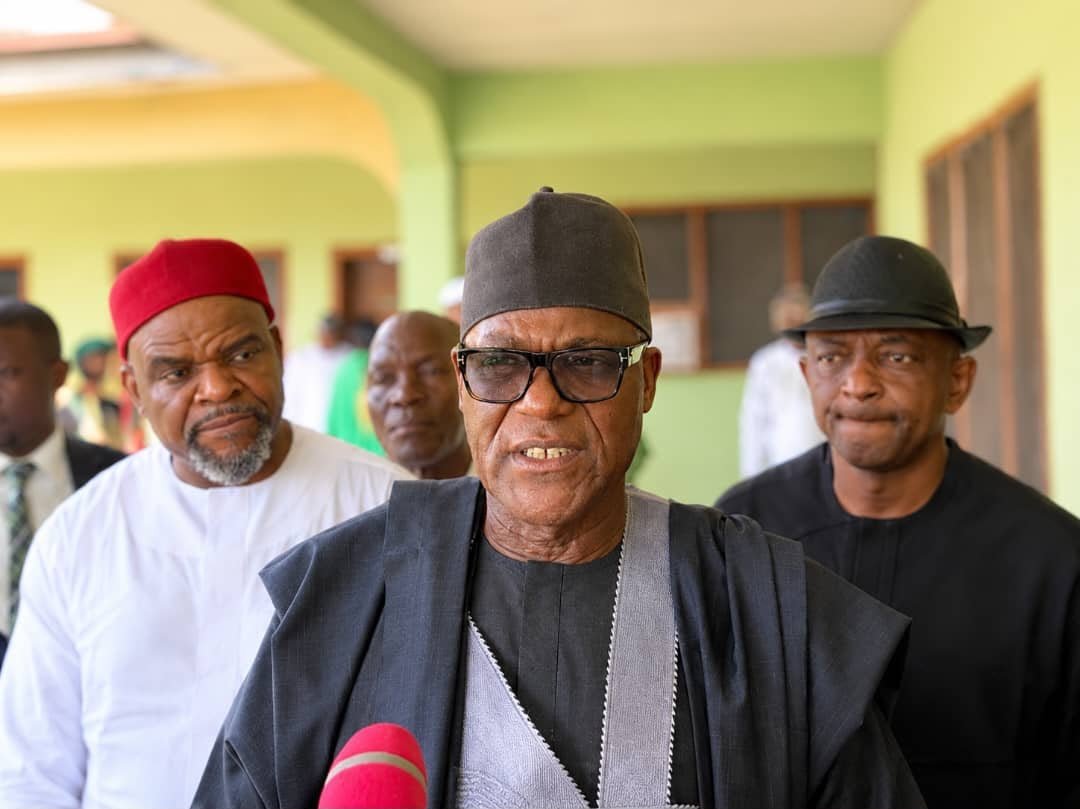
…Urges graduates to deploy talents to tackle national challenges
A former Speaker of the House of Representatives, Yakubu Dogara, has said Nigeria’s security challenges predate the administration of President Bola Tinubu, noting that terrorism, insurgency and banditry had been entrenched in the country for years before 2023.
Dogara, who is the Chancellor of Achievers University, Owo, Ondo State, spoke at the institution’s 16th convocation ceremony, where 836 graduands received various academic qualifications.
He said the country’s security problems were rooted in years of porous borders, illegal arms proliferation, youth unemployment and the spread of extremist ideologies.
“Insecurity in Nigeria did not begin with this administration. This is no excuse, because the facts need no defence. Terrorism, insurgency, banditry, kidnapping and communal violence did not arrive in 2023,” he said.
Dogara added that the challenges had developed over several years, stressing that their roots went deep before Tinubu assumed office in May 2023.
ALSO READ: 2027: Dogara breaks silence on Tinubu’s running mate speculation
He, however, noted that Tinubu had consistently identified national security as a major responsibility of his administration.
He also congratulated the graduands, saying the country needed their talents, creativity and innovation.
Dogara urged the graduands to deploy the knowledge and skills acquired during their academic pursuits towards addressing the country’s numerous challenges, particularly in the areas of insecurity, economic development and social transformation.
He said Nigeria needed the creativity, innovation and intellectual contributions of its young people to overcome its developmental setbacks.
He challenged them not to see their certificates as mere qualifications for securing employment but as a call to contribute meaningfully to society, create opportunities and become agents of positive change.
He urged them to embrace innovation, enterprise and responsible leadership in their respective fields of endeavour.
In his address, the Pro-Chancellor of the university, Prof. Bode Ayorinde, said Nigeria had made significant progress in expanding access to tertiary education but expressed concern about the prospects of graduates after leaving school.
Ayorinde cited figures from the National Universities Commission, which put the number of universities in the country at 312 as of June 2026, comprising 77 federal, 67 state-owned and 168 private institutions.
He said the institutions represented a huge investment in human capital, with parents, governments and lecturers making sacrifices to produce skilled professionals, but questioned what opportunities awaited graduates after completing their studies.
The Vice-Chancellor, Prof. Omolola Irinoye, said the university had remained committed to providing quality education that combines intellectual development, practical skills, character building and social responsibility since its establishment.
WATCH TOP VIDEOS FROM NIGERIAN TRIBUNE TV