

Every time a company tells you its artificial intelligence works autonomously, somebody somewhere taught it what a human body looks like when it has been injured, and somebody else decided whether a photograph crossed a line.
A good deal of that work has been done in East and West Africa, by young graduates, for wages that would not cover a month’s rent in the cities where the companies are headquartered.
This is the part of the AI economy that does not appear in the pitch decks. Data labelling. Content moderation. Reinforcement learning from human feedback, which is the technical name for people correcting a model’s answers until it stops producing the wrong ones. Systems described as intelligent are, in significant part, systems that have been manually corrected at scale by people who were paid very little and told very little about what they were about to see.
We know what it costs them, because a court in Nairobi now has the evidence on file.
What the Kenyan cases have actually established
In December 2024, psychiatric evidence was submitted to Kenya’s Employment and Labour Relations Court by Dr Ian Kanyanya, head of mental health services at Kenyatta National Hospital. He had assessed 144 of the 185 former Facebook content moderators bringing the case. Eighty-one per cent of those he assessed had severe or extremely severe post-traumatic stress disorder. The diagnoses also included generalised anxiety disorder and major depressive disorder.
Their reported pay was around 429 dollars a month.
It is worth being precise about where these cases stand, because the reporting around them has been loose, and the detail matters more than the drama.
There are three separate actions. The first was brought in May 2022 by Daniel Motaung, a South African who was dismissed after organising a strike, alleging forced labour, union-busting and inadequate mental health support. The second, filed in March 2023, is the mass redundancy and blacklisting petition brought by 185 moderators. The third, the one carrying the widely quoted 1.6 billion dollar claim, is a different case altogether, concerning hate speech in Ethiopia, and it is routinely and wrongly attached to the moderators.
What the courts have decided so far is jurisdictional, and it is significant. Meta argued that Kenyan courts had no business hearing a claim against a company incorporated elsewhere and that the moderators were employed by its contractor rather than by it. In 2023, the court rejected that and treated Meta as the primary employer for the purposes of interim orders. In September 2024, the Court of Appeal dismissed Meta’s appeals as devoid of merit, confirming that it can be sued in Kenya. In April this year, the court ordered a senior Meta executive, its director of scaled regulatory response, to appear for cross-examination on an affidavit stating that Meta did not hire or fire moderators. Last month, Meta and its Irish entity were given twenty-one days to file their responses in the Motaung case.
No court has yet found Meta liable. Anyone telling you otherwise has read a headline rather than a judgement. What four years of litigation has established is narrower and, for the purposes of this argument, more useful: a client company’s contractual distance from the people doing its work is not, in a common-law African jurisdiction, a reliable shield.
The jobs are real. So is the precarity.
In April this year, Sama issued redundancy notices to 1,108 staff in Nairobi after Meta ended what the company described as a key engagement that it had tried and failed to retain.
Those jobs did not disappear because a model replaced them. They disappeared because one client changed its mind.
That is the characteristic danger of building an economy on being somebody else’s back office, and it is the third major job shock at that hub in three years. It should be read alongside the fact that the same company had already closed its content moderation arm in January 2023, cutting around 260 moderators, and refocused on annotation. The work does not vanish when a contract ends. It moves, and it changes its name.
Why Nigeria should be paying attention
Three reasons, and the first is the one nobody mentions.
Nigerians were part of this story from the beginning. The Nairobi moderation hub recruited across the continent. The African Content Moderators Union, formed in Nairobi in 2023, has a Nigerian chapter chaired by Kauna Malgwi, a clinical psychologist who moderated Hausa-language content for four years before founding a digital rights and mental health organisation. She was named to TIME’s hundred most influential people in artificial intelligence in 2024 and to the BBC’s hundred women in the same year, and TIME credits her advocacy with influencing European parliamentary work on platform labour. This is not a foreign dispute we are observing. Nigerians helped bring it.
The second reason is that Nigeria is now actively courting this category of work. Hire From Nigeria launched this year with government backing and a target of one million export-linked jobs by 2030, and our technology agency is pushing, rightly, for higher-value AI-enabled services rather than conventional outsourcing. But the realistic near-term demand from international buyers is not all high-value. A substantial share of it is annotation, labelling, moderation and model evaluation, which is to say the work Kenya has spent four years litigating.
The third reason is that our own legal protections for this work are untested. Nigerian labour law was not written with a graduate reviewing violent content to a quota in mind, and the question of whether work-related psychological injury is compensable here has not been seriously examined. We are recruiting into a category of work whose occupational hazard is a psychiatric one, without having decided what we owe the people doing it.
The argument that standards cost jobs, and why I think it is wrong
I understand the counterargument, because it is the argument that built our outsourcing sector. These are jobs. The country needs jobs. A formal contract with benefits in Lagos beats informal work in Lagos, and in a country where ninety-three per cent of employed people work informally, that is not a small thing. Sama says it pays living wages, and it has the independent engagement to point at. If we make demands, foreign firms will simply go elsewhere.
Two things make me think that argument is weaker than it looks.
The first is what happened when someone actually audited this work. The Fairwork project at the Oxford Internet Institute scored Sama zero out of ten in August 2023. By December, after engagement, the company had made twenty-four changes, including a guaranteed living wage, an end to unpaid overtime and longer contracts, and scored five. Fairwork’s more recent assessment puts it lower again, at three, which may reflect changed methodology and should be checked rather than assumed. But the direction of the first finding is the point. Standards in this sector are not economically impossible. They are simply not demanded.
The second is what the Kenyan rulings have done to the risk calculation. Every multinational buying this work now knows that a client can be pulled into a labour court in the jurisdiction where its supplier operates and that its executives can be ordered to testify. That changes what buyers want. A jurisdiction with clear standards, documented clinical support and lawful contracting is no longer the expensive option. It is the defensible one.
Protection has become a competitive feature. The first African country to understand that will take contracts from the ones still competing on cheapness and silence.
ALSO READ: Flávio Bolsonaro denies fleeing Brazil after landing in Miami
What that looks like in practice
Recognise content moderation and data annotation as hazardous work and regulate them accordingly. We already accept that certain occupations expose workers to harm and require specific protections. Reviewing the worst material the internet produces, for eight hours a day, to a quota, is such an occupation. Mandatory clinical support, exposure limits, and informed consent at recruitment are not radical asks. Eighty-one per cent severe PTSD in an assessed group is not an argument about workplace comfort.
Require transparency at the point of hiring. Several of the Kenyan claims turned on recruitment that did not make clear what the job actually involved. A young Nigerian answering an advertisement for a data role is entitled to know, before signing, whether it involves reviewing violent or sexual content.
Write client liability into procurement and investment agreements, rather than waiting for a Nigerian court to arrive at it the slow way, through the lives of the people it happened to.
Protect the right to organise. The union-busting allegation runs through all of this, and it is the easiest failure to repeat.
And diversify the buyer base deliberately. One thousand one hundred and eight people lost their jobs in Nairobi because of a single client decision. An impact sourcing strategy with one dominant customer is not a development strategy. It is a dependency with better branding.
None of this requires Nigeria to turn away the work. It requires us to take it on terms we would be willing to defend publicly, which is a lower bar than it sounds and one this industry has been allowed to duck for a decade.
There is nothing autonomous about artificial intelligence. There are only people, somewhere, doing the part the demonstration leaves out. Nigeria is about to employ a great many of them. The only question still open is on what terms.
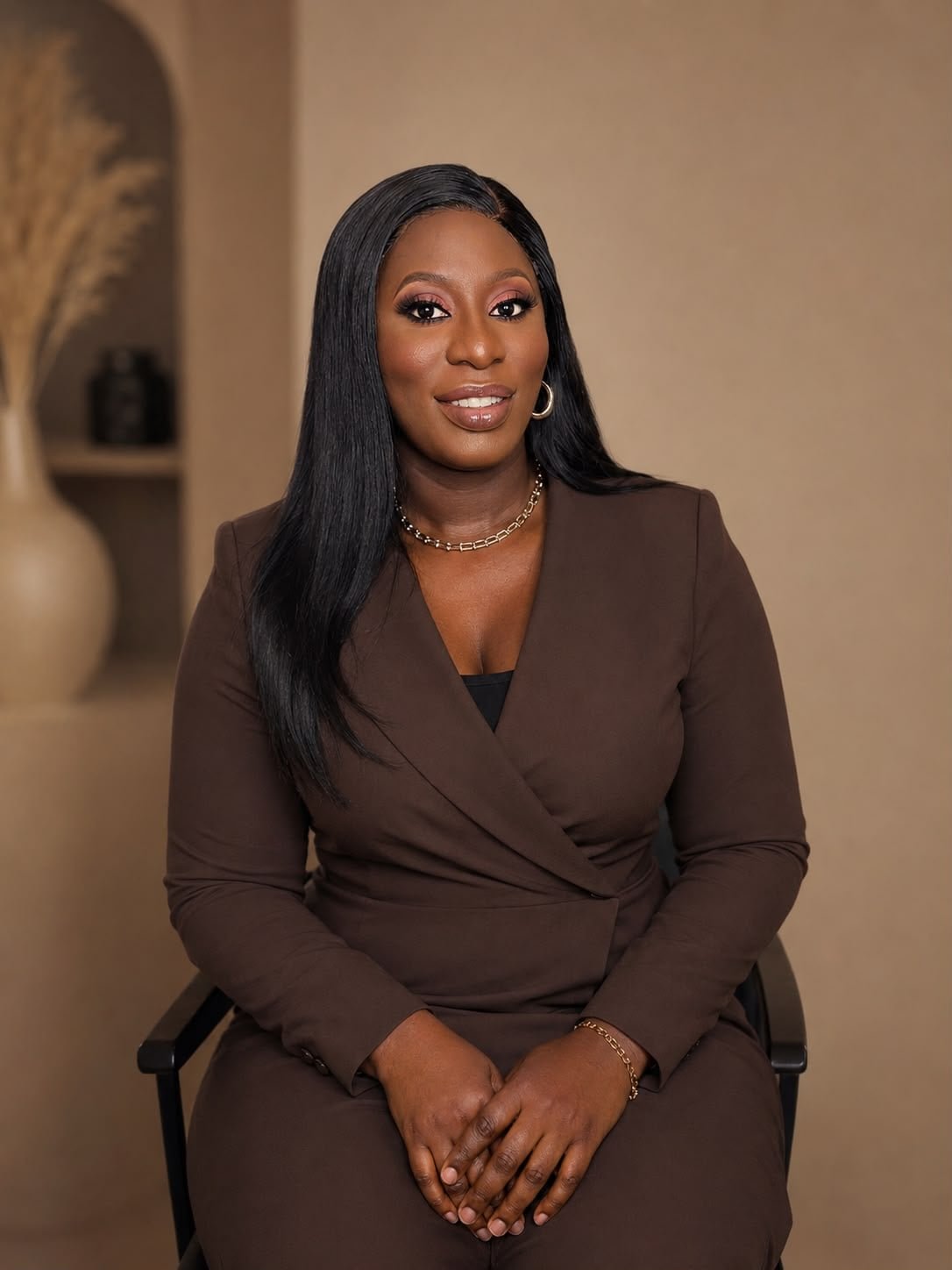
Abisola Areola is a certified senior project manager and the founder of Skills Co-op, a cooperative social enterprise delivering free digital and AI skills training. She writes on AI, workforce intelligence, and the human layer that determines whether transformation works.
WATCH TOP VIDEOS FROM NIGERIAN TRIBUNE TV