

The Federal Government has been urged to revisit the national blueprint for regional centres of excellence as a strategic move to curb rampant medical tourism and retain vital capital within the country.
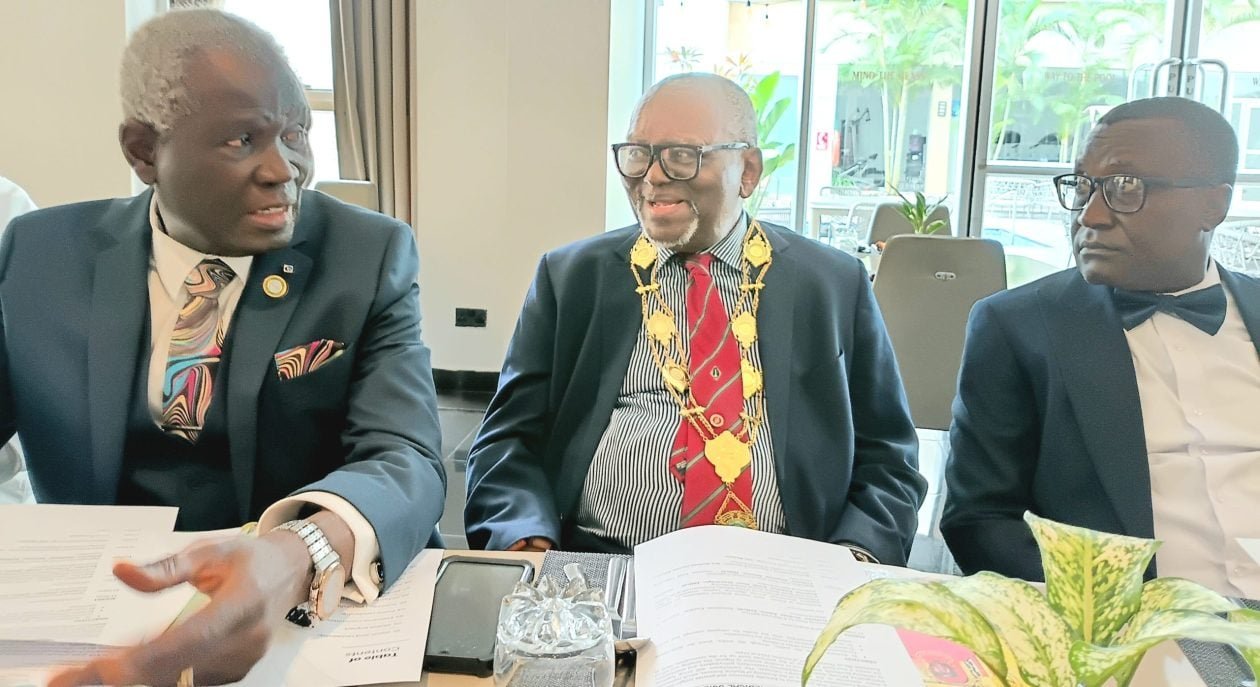
The call was made by Professors Oladapo Ashiru and Osato Giwa-Osagie, the founding and outgoing presidents, respectively, of the Academy of Medical Sciences of Nigeria (AMSN).
The scholars spoke during a pre-event press briefing in Lagos ahead of the academy’s sixth scientific conference and annual general meeting.
The conference, scheduled to take place in Lagos from Friday, October 30, to Saturday, October 31, will feature the investiture of the new president and the induction of 12 professors and one PhD holder from various medical fields across Nigeria as fellows of the academy.
The duo argued that the health challenges of top political leaders should be leveraged to build long-term local capacity, drawing an analogy with a historical precedent set by Saudi Arabia.
“When one of the kings of Saudi Arabia had a renal problem and needed sophisticated dialysis machinery, he ordered two machines—one for his palace and one for a Saudi hospital—and flew in foreign experts to operate them,” noted Prof. Ashiru, who also serves as president of the Africa Reproductive Care Society (ARCS).
He contrasted this with Nigeria’s history, citing instances in which former President Umaru Musa Yar’Adua travelled to Saudi Arabia for renal treatment and another president required surgery abroad for radiculopathy.
Instead of flying officials abroad for treatment, Ashiru recommended that the government use its vast resources to bring advanced medical equipment and leading global experts directly to the National Hospital in Abuja or other prominent public hospitals across the country, developing them into centres of excellence.
The core of the proposed strategy relies on a mandatory understudy framework to facilitate technology and knowledge transfer.
“They can bring in those experts to treat that government official in Nigeria… and then get our own Nigerian professionals to work alongside them as they manage the conditions,” Ashiru stated. “By doing that, they will be transferring their expertise and technology to our own people who understudy them.”
He emphasised that this practical approach would systematically establish world-class, government-owned centres in Nigeria for treating critical ailments. These include advanced renal transplantation and kidney dialysis, complex spinal and radiculopathy surgeries, and major orthopaedic interventions, among others.
While Prof. Giwa-Osagie acknowledged that some prominent political figures in Nigeria prefer to travel abroad to keep their ailments private, he noted that the majority of citizens cannot afford treatment at local private hospitals where such advanced equipment is available.
Furthermore, while stressing that Nigeria boasts highly skilled medical professionals, including cardiologists, nephrologists and surgeons, both scholars pointed out that the prohibitive cost of equipment and a challenging domestic operating environment remain major bottlenecks.
“We have the expertise right here in Nigeria across all medical fields,” Giwa-Osagie concluded. “But the medical equipment and treatment are very expensive. The environment is another critical issue that needs to be looked into by the government. If we can address these structural challenges, we can reverse medical tourism in this country. It is entirely doable if there is political will.”
WATCH TOP VIDEOS FROM NIGERIAN TRIBUNE TV