

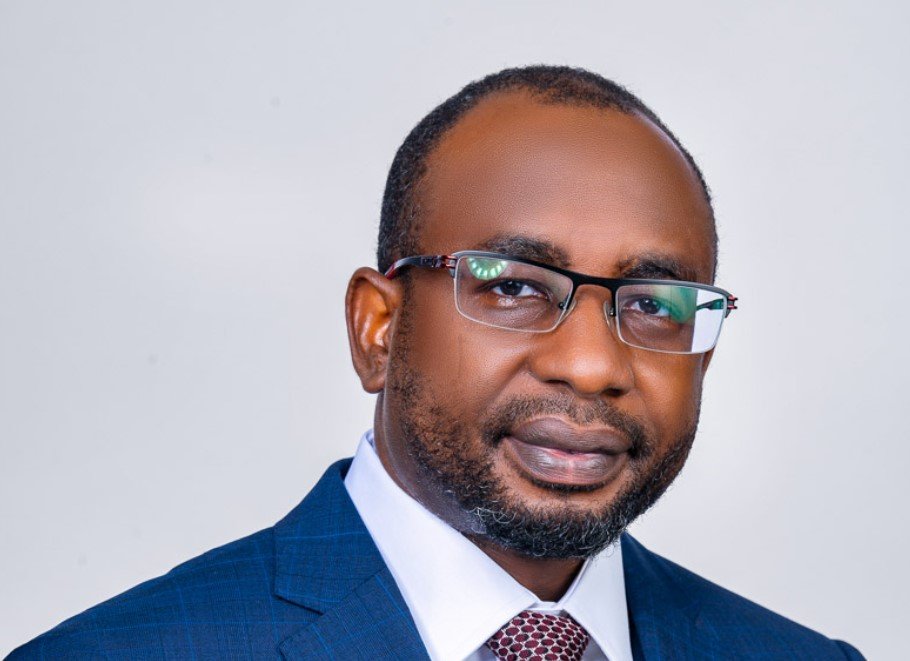
The Director-General of the National Information Technology Development Agency, NITDA, Kashifu Abdullahi Inuwa, has warned that artificial intelligence, AI, is making cyber attacks more sophisticated, increasing the risk of online fraud, social engineering, deepfakes and disinformation.
Addressing ICT journalists in Abuja, Inuwa said cybersecurity in the age of AI differs significantly from attacks carried out before the technology became widely available, noting that AI can strengthen both cyber attacks and defence mechanisms.
“That means you can use AI to attack or to defend. Attacking with AI is more successful than attacking before AI. Likewise, defending,” he said.
The NITDA chief explained that the growing use of AI agents to automate organisational workflows could expose institutions to serious risks if hackers gain control of the systems.
“Imagine someone hijacking your AI agent. It’s like someone taking over control of your staff. It will make attack very easy for anyone taking over your AI data,” he said.
He added that although AI could make cyber attacks easier, it could also improve threat detection and enable organisations to respond more effectively to security breaches.
Inuwa, however, warned that human beings were increasingly becoming targets of cybercriminals, who exploit psychological weaknesses and social engineering rather than attempting to breach computer systems directly.
“As a hacker, it’s easier for me to hack humans than hacking systems. If I can do social engineering tricks to get to do what I want, why should I spend days or months trying to break into a system?” he asked.
He expressed concern over the influence of social media, noting that people increasingly rely on online platforms for news and information, making them vulnerable to AI-generated content designed to manipulate their beliefs and decisions.
“Imagine someone using AI-generated content, manipulating us, controlling what to see, what to believe, and so on,” Inuwa said.
He stressed the need to protect both technological infrastructure and human networks against misinformation, disinformation and fake news, arguing that national cybersecurity must extend beyond computer systems to include the information people consume.
He said that the Nigerian Communications Commission, NCC, the National Information Technology Development Agency, NITDA, and the Office of the National Security Adviser, ONSA, will be partnering in spreading the message on the dangers of cybersecurity.