

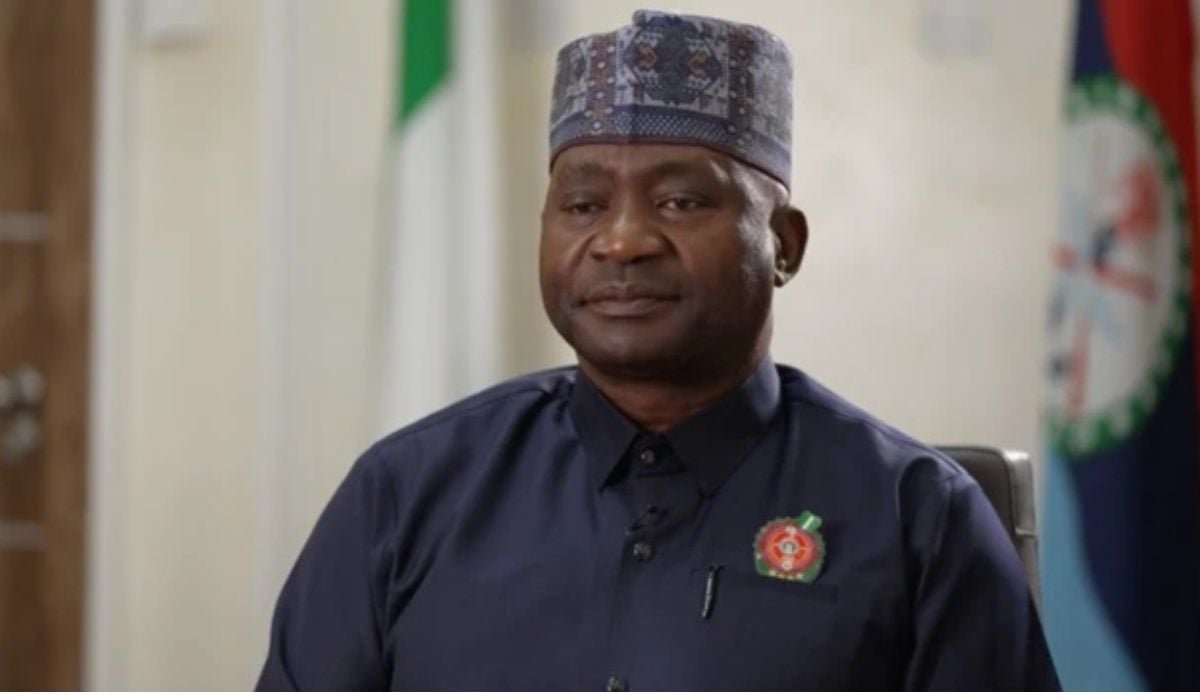
The National Agency for Science and Engineering Infrastructure (NASENI) has commissioned a training centre for Unmanned Aerial Vehicles (UAVs) in Kaduna, as the Federal Government renewed its call for Nigeria to develop indigenous technological capacity and reduce dependence on foreign security technology.
The Defence Minister, Gen. Christopher Musa, represented by the Commandant of the Air Force Institute of Technology (AFIT), Air Vice Marshal Adeniran Kolade Ademuwagun, said the country must build the expertise to operate, maintain and adapt technologies to meet its security needs.
Speaking at the official commissioning of the NASCAV UAV Training Centre, the minister said technological self-reliance went beyond acquiring equipment to developing the knowledge, skills and local capacity required to sustain it.
He warned that excessive dependence on foreign suppliers could expose Nigeria to vulnerabilities, particularly when access to technical information, equipment maintenance and critical security systems remained largely in the hands of external partners.
The minister said developing local expertise would reduce dependence on foreign technology, minimise maintenance delays and improve the availability of equipment for security operations.
He added that indigenous technological capacity was essential to strengthening intelligence gathering and addressing the country’s security challenges.
He noted that UAVs had become important tools for surveillance, reconnaissance, infrastructure protection and intelligence gathering, stressing that their effectiveness depended on trained personnel, proper maintenance, sound operational procedures and responsible deployment.
In his remarks, the NASENI Executive Vice Chairman and Chief Executive Officer, Khalil Suleiman Halilu, highlighted the importance of building indigenous technological capacity, particularly in equipment development, assembly, training and maintenance.
Halilu said Nigeria needed to invest in local knowledge and practical skills to ensure that technological innovations translated into tangible benefits for national development. He emphasised the importance of sustained partnerships among government institutions, industry and technical organisations in developing solutions to the country’s challenges.
He also noted that UAV technology had applications beyond security, including agriculture, healthcare and other critical sectors. According to him, developing local expertise would expand opportunities for young Nigerians while supporting innovation and economic growth.
Halilu urged the trainees to approach their work with discipline, curiosity and a commitment to continuous learning, saying the long-term value of the facility would depend on the competence of the people trained and their ability to apply the knowledge acquired.
Governor Uba Sani of Kaduna State described the centre as an important investment in indigenous technology, technical skills and innovation, saying it would strengthen Nigeria’s capacity to train professionals in UAV operations.
The governor said the facility represented more than a training centre, as it would help develop practical knowledge and create opportunities for Nigerians to contribute to technological advancement. He commended NASENI and its partners for supporting the initiative.
Sani particularly highlighted the centre’s female-led structure, noting that at least 60 per cent of its participants were women. He said the initiative demonstrated the importance of creating opportunities for women to participate in emerging technology fields.
“This is a deliberate statement that the future of aviation and technology in Nigeria must be shaped and led by women,” the governor said.
He added that expanding access to technical training would help build a skilled workforce capable of deploying UAV technology in agriculture, security, infrastructure monitoring and other areas of national development.
The governor also commended the NASENI leadership, the AFIT Commandant and his team, as well as other stakeholders, for their contributions to the project. He expressed the state government’s commitment to initiatives that promote innovation, skills development and economic opportunities.
Earlier, private-sector partner Rotimi Makonuola described the centre as a practical investment in developing Nigeria’s UAV capabilities, saying the partnership was designed to expand training opportunities and strengthen the country’s technical workforce.
Makonuola said the facility would help prepare more professionals to operate UAVs and apply the technology to practical challenges in security, agriculture and infrastructure development. He thanked NASENI, AFIT, the Kaduna State Government and other partners for supporting the initiative.
The speakers stressed the need for sustained collaboration between government, technical institutions and private-sector partners to ensure that the training centre produces skilled professionals who can contribute to Nigeria’s technological self-reliance and broader development.
WATCH TOP VIDEOS FROM NIGERIAN TRIBUNE TV