

By; BODE OPESEITAN
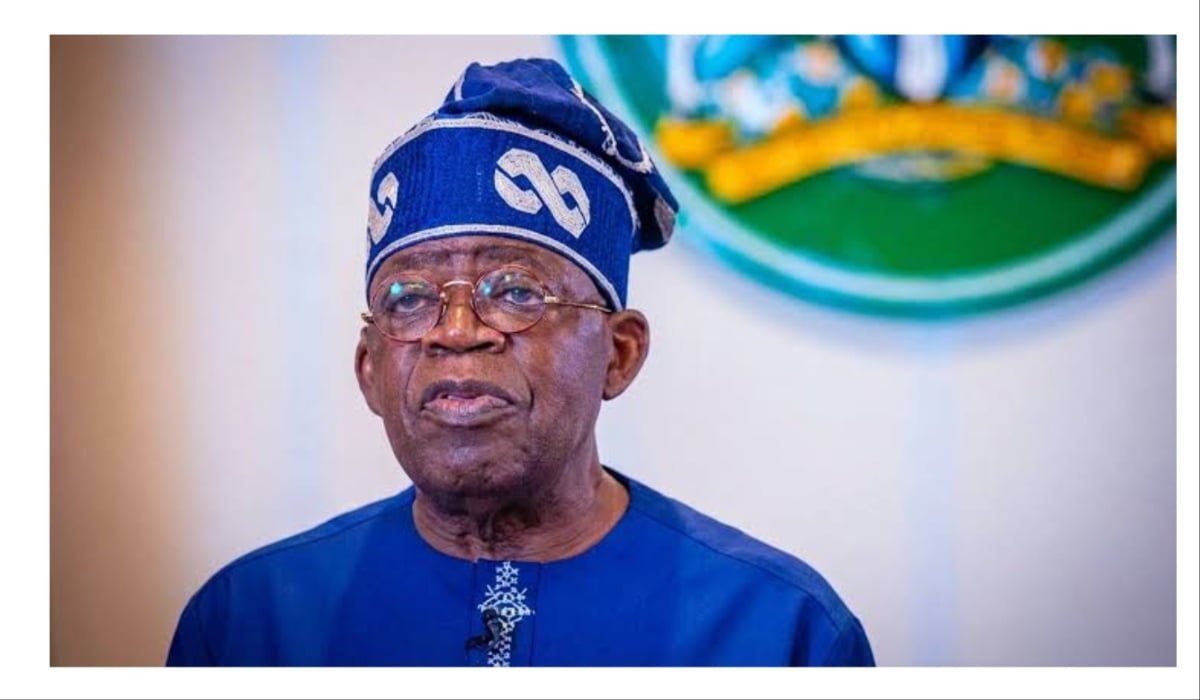
President Tinubu’s independence address is not a victory lap. It is a doctor’s follow-up visit, telling a patient who survived chemotherapy that the cancer is in remission and the hard phase of treatment is behind him. The core message for ordinary Nigerians is this: the brutal subsidy removal, the floated naira, the painful 2023 to 2025 stretch, that was the surgery, not the sickness, and the vital signs now justify hope for full recovery and accelerated growth.
Why the Medicine Was Non-Negotiable
Tinubu’s cancer metaphor is more literal than poetic licence. Petro-states that chose the morphine of endless subsidies and printed money over structural surgery have histories written in ash. Venezuela, sitting on the world’s largest oil reserves, spent decades subsidising fuel, fixing its exchange rate, and financing deficits by printing bolívars, a habit that detonated into hyperinflation exceeding 50% a month by late 2017, wiping out savings and sending millions abroad. Zimbabwe walked an almost identical path a decade earlier: price controls, currency collapse, and a government that preferred denial to diagnosis until its own money became wallpaper. These are not textbook cautionary tales; they are the precise cliff edge Nigeria’s reserves, just $3.99 billion at the end of 2023, were drifting toward before the float and the subsidy exit gave the economy its footing back.
The second example cuts closer to home in spirit, if not geography, and offers real encouragement. Argentina’s Javier Milei inherited 210% annual inflation and chose Tinubu’s exact prescription: cut subsidies, let the peso find its level, stop financing the deficit with the printing press. Inflation has since fallen to roughly 30 to 33% annually, with monthly prints as low as 1.7 per cent by August 2026, and the IMF’s own managing director has publicly praised what she called the sacrifice of the Argentine people as a turnaround story.
Nigeria’s numbers tell a similarly encouraging story. Gross external reserves have climbed to over $55.6 billion by October 2026, their highest level in more than 18 years and enough to cover 11.3 months of imports, a sharp advance from the precarious position of 2023. Inflation has eased from a 2024 peak above 34% to around 15.4% by mid-2026, and non-oil exports crossed $6 billion for the first time in the nation’s history. The IMF, in its 2026 Article IV Consultation Report, strongly praised the structural macroeconomic turnaround under President Tinubu. Yet it urged the government to take measures to reduce public hardship, a reminder that stabilisation and relief do not arrive on the same schedule.
Was the Sacrifice Worth It, and What Does It Buy You?
For the trader whose transport costs tripled and the civil servant whose salary stopped stretching to month end, the honest answer is: increasingly, yes. GDP growth accelerating from 3.38% in 2024 to 4.43% by the second quarter of 2026, a naira that has genuinely stabilised rather than lurching daily, and a stock market that has risen from roughly N30 trillion in 2023 to over N160 trillion by August 2026, a gain of more than 430%, are not abstractions. They are the preconditions for cheaper diesel, steadier factory power, and credit programmes like CREDICORP that let a salaried Nigerian finance a solar system instead of saving towards it for a decade. Prosperity has not landed on every doorstep yet, but the foundation it will be built on is now solid, which is genuinely good news rather than a consolation prize.
Not Yet Uhuru, but the Horizon Is Clearing
Macro stability and household prosperity move on related but different timetables, and the gap between them is simply the next job to be done, not a cause for alarm. Argentina’s own experience is instructive here: Milei tamed inflation and rebuilt reserves, and while poverty ticked up again in early 2026 as the economy adjusted, the underlying trend before and since has been one of recovery, with growth returning and the IMF backing the programme as fundamentally sound. Nigeria’s food inflation easing alongside headline inflation, even if unevenly, suggests the same transition from stabilisation to broader relief is already under way.
The call to duty is genuinely shared, and it is an energising one rather than a grim one. Government must now intensify the process of converting stabilisation into productivity: more irrigation, more roads, more gas powered industry, and a social register that reaches everyone it is designed for. The Centre for the Promotion of Private Enterprise put it well after the speech, urging a shift “from stabilisation to productivity,” because reserves alone do not pay school fees, farms and factories do. Citizens, for their part, are being asked for something achievable: discipline against calls to return to subsidy addiction, patience measured in a few more years rather than a few more months, and the civic energy to keep demanding delivery now that the foundation is in place.
Has Tinubu Earned the Right to Ask for More Time?
Trust here is a receipt checking exercise, and the receipts are genuinely strong. Reserves at an 18-year high, inflation nearly halved from its peak, record non-oil earnings, decaying infrastructure across Nigeria now enjoying massive rehabilitation, and salaries paid on time are real, auditable progress, not rhetoric. That is the kind of track record that earns a leader the benefit of the doubt, particularly one who has been candid that the first three years were about repair rather than reward.
Credibility earned through stabilisation is capital to be reinvested, and Argentina shows how it can be reinvested well: Milei’s reforms, despite a bumpy patch, remain on course precisely because the fundamentals kept improving even when public patience wavered. Tinubu’s speech is, in effect, a request to spend that capital on the next phase, and it is a reasonable one given the trajectory so far. The sacrifice has already bought Nigeria real distance from the Venezuela and Zimbabwe cliff edge.
Should this turnaround from imminent total collapse to stability and assured hope for unprecedented growth earn Tinubu a second term? For me, the answer is a resounding yes. For 33 of Nigeria’s 36 state Governors, including all 31 APC governors who have pledged to deliver their states for Tinubu’s re-election, and the Governors of Anambra and Osun, who have openly endorsed him despite being in different parties, people who no longer need to beg banks for loans to pay salaries or provide services, it is a resounding yes. For the vast majority of Nigeria’s 774 local government chairmen, now empowered by financial autonomy to deliver democracy’s dividends directly to their people, it is a resounding yes. For most of the 1.6 million Nigerian students who have benefited from NELFUND, it is a resounding yes. Even for the leadership of the National Association of Nigerian Students, now undertaking a nationwide, first-hand inspection of federal roads serving tertiary institutions and commending the administration’s infrastructure renewal, it is a resounding yes. For most Nigerians who have watched the stock market’s capitalisation rise by more than 430% since May 2023, it is a resounding yes. For the more than 60,000 Nigerian women for whom the Federal Government has covered the cost of caesarean sections and other emergency maternal care under its mortality reduction initiative, it is a resounding yes. For pensioners at the Nigerian Airways and many others whose pensions have now been paid after decades in limbo, it is a resounding yes. For civil servants across Nigeria whose salaries are now paid regularly, it is a resounding yes. For farmers in Southern Kaduna and elsewhere in Nigeria, where Kaduna State alone has recovered more than 500,000 hectares of farmland from bandits since 2023, who can now till their land and feed their families without the fear of losing their lives, it is a resounding yes. For the passengers in Abuja who have ridden free on the Rail Mass Transit since its relaunch in May 2024, a gesture first planned for two months that Tinubu himself extended and that has now stretched into its third year, carrying roughly 4 million passengers in its first 15 months alone, it is a resounding yes.
All Tinubu and his team need to do is to ensure that 2027’s receipts show prosperity reaching kitchen tables as clearly as it already shows up in the reserve columns.
Asiwaju Bola Ahmed Tinubu
All Progressives Congress
Renewed Hope United Kingdom
Hope Uzodimma
Nigerians In Diaspora
#Tinubu
#nigeria
#RenewedHope