

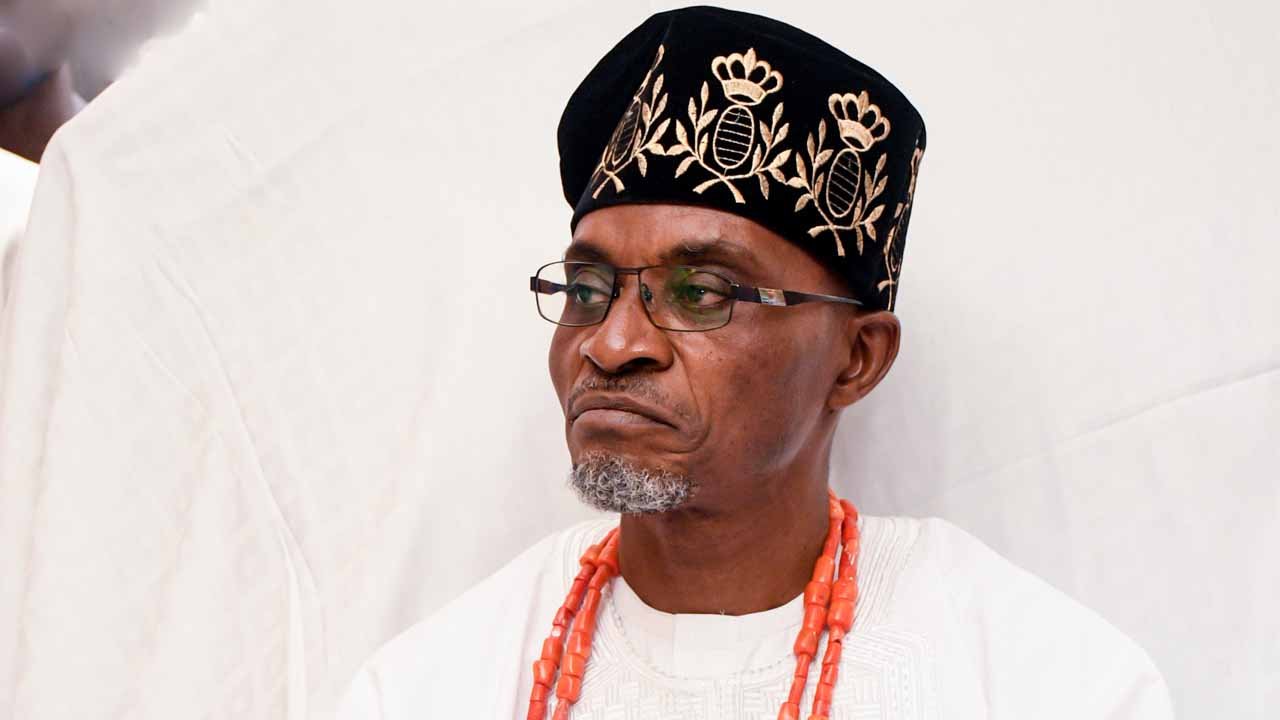
The growing intersection between traditional institutions and partisan politics in Nigeria came under scrutiny during The Toyin Falola Interview, as Professor Toyin Falola and the Olowu of Owu Kingdom, Abeokuta, Oba Professor Saka Adelola Matemilola, examined the political responsibilities and limits of traditional rulers in contemporary Nigeria.
The discussion formed part of the interview themed “Indigenous Education, Character Formation and the Making of Citizens,” but broadened into a significant conversation about governance, political authority and the place of traditional institutions in a democratic society.
The panel was led by Falola and included Professor Gabriel Olatunde Babawale, renowned scholar of Political Economy; Professor Bridget Itunu Awosika, distinguished Professor of Home Economics at Adeyemi Federal University of Education; and Dr Olabimpe Olori Adeyemi, linguist, poet and chanter and a lecturer in linguistics and Nigerian languages at the University of Ilorin.
Introducing the Olowu, Falola described him as “the rare synthesis of traditional leadership and global academia,” noting his academic training in Mechanical Engineering at the University of Ibadan and Applied Mechanics at the University of Cambridge, alongside his professional experience in engineering and the energy sector.
The political dimension of the conversation emerged from a question about whether traditional rulers can remain relevant in modern governance without becoming political actors.
For Matemilola, the distinction is critical. He argued that traditional rulers cannot completely detach themselves from governance because their communities are affected directly by government decisions, but they must distinguish participation in governance from partisan political alignment.
“The reality is this: we cannot absorb ourselves from the politics of governance. However, partisanship is what must be avoided by traditional rulers. It must be,” the monarch said.
He explained that the authority of a traditional ruler derives partly from the expectation that the monarch represents the entire community rather than a section identified with a particular political party.
“We are supposed to be the father of our people,” he said.
Matemilola consequently warned against traditional rulers openly campaigning for political parties or candidates.
“When a monarch, a traditional ruler begins to carry the placard of a particular political party, then that person is ridiculing his stool and his people,” he said.
“So, again, we must avoid partisanship as traditional rulers,” he added.
ALSO READ: Nigeria at 66: Reconstructing a nation for enduring prosperity
The issue raised a wider question about the relationship between political power and traditional authority in Nigeria. Falola’s intervention challenged participants to consider whether traditional institutions lose part of their legitimacy when they become too closely associated with political interests.
The question is particularly significant because traditional rulers remain influential at the community level even though they do not derive their authority from electoral contests. Their ability to mediate disputes, mobilise communities and engage government officials gives them a continuing public role, while their traditional status places expectations of neutrality upon them.
Matemilola argued that this grassroots position should instead be used to strengthen governance.
“For those who really know their role and are playing their role, they are close to the grassroots. They know people in the various neighborhoods,” he said.
According to him, that proximity is especially valuable in dealing with insecurity.
“When there’s an issue, there’s a problem, for example, insecurity, they get to know very quickly,” he said.
He added: “So, when it comes to security issues, traditional rulers are very, very key to ensuring that we are able to stem the tide of insecurity that we have in this country.”
For Falola, the issue was not simply whether kings should remain relevant but how their traditional authority should relate to the institutions of the modern state. His questioning brought into focus the apparent tension between inherited authority and democratic political structures.
Matemilola, however, described the two systems as capable of operating alongside each other.
“I don’t see that as a threat to them at all because it’s complementary, it’s supporting them,” he said.
He argued that the relationship could become more productive if the responsibilities of traditional rulers were properly defined rather than left largely to convention.
“Our role is formally not just recognized but also given the right responsibility in the constitution and accountability in the constitution, such that we are able to benefit and complement the efforts of the established political structure that we have,” he said.
The monarch also identified traditional dispute resolution as an area where the palace could contribute to the effectiveness of government institutions. Referring to the Owu Alternative Dispute Resolution initiative, he said traditional institutions could help address cases that might otherwise remain within an already burdened judicial system.
“ADR is another major area that can help with the judicial system. It can help free our judicial system,” Matemilola said.
“There are a lot of backlogs of cases that judges are struggling with that can be resolved amicably in palaces,” he added.
The conversation thus presented traditional institutions not as substitutes for elected government but as community-based institutions whose influence could be harnessed without compromising their political neutrality.
The distinction between participating in governance and participating in partisan politics emerged as one of the clearest positions from the discussion. For Matemilola, traditional rulers can engage government, contribute to security and development discussions and represent community interests, but their authority becomes vulnerable when they openly identify themselves with particular political parties.
WATCH TOP VIDEOS FROM NIGERIAN TRIBUNE TV