

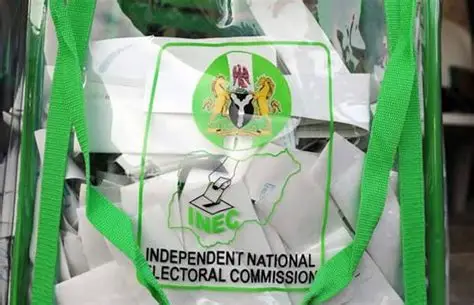
For nearly half a million registered voters across Gombe, Kwami and Funakaye Local Government Areas of Gombe State, Saturday’s election is more than another entry on the electoral calendar.
On September 19, 495,851 voters are expected to decide who will occupy the vacant Gombe/Kwami/Funakaye Federal Constituency seat in the House of Representatives.
Five political parties are in the contest. Their candidates have spent weeks mobilising supporters and making their cases to voters.
But beneath the political competition lies another story — one about security, infrastructure, political violence, the credibility of the electoral process and what residents expect from whoever eventually represents them.
The election comes at a particularly significant moment. With the 2027 general elections approaching, the bye-election is being watched not only as a contest for a single House of Representatives seat but also as an early indication of how political competition and election security may be managed in Gombe.
For the Independent National Electoral Commission (INEC), however, the immediate assignment is straightforward: organise the election, protect the process and ensure that eligible voters can cast their ballots without intimidation.
That task is complicated by the sheer size of the constituency.
There are 31 Registration Areas and 903 Polling Units spread across the three local government areas, creating a substantial logistical and security operation for electoral and security officials.
At a meeting of the Inter-Agency Consultative Committee on Election Security in Gombe on September 15, the Resident Electoral Commissioner, Umar Gajiram, acknowledged the scale of the assignment.
“These figures give us a clear indication of the magnitude of the assignment before us. They also underscore the importance of effective security planning, inter-agency coordination and timely deployment of personnel and resources,” he said.
Shadow over ballot
The concern is not simply the number of polling units.
INEC has identified Gombe and Funakaye as areas of high electoral risk, citing concerns over the activities of political thugs, popularly known as “Kalare boys”.
For an election that requires voters to turn out, political agents to monitor proceedings and electoral officials to move freely with sensitive materials, the presence or mobilisation of violent groups could have consequences well beyond individual polling centres.
Gajiram said the activities of such groups could intimidate voters, disrupt polling, interfere with election officials and materials and discourage citizens from participating.
“We must take this threat seriously as the presence or activities of such groups can undermine the peaceful conduct of elections, intimidate voters, disrupt polling, interfere with election officials and materials, and potentially discourage citizens from participating in the electoral process,” he said.
But the REC was careful to distinguish between identifying security vulnerabilities and labelling entire communities as violent.
“These assessments are not intended to stigmatise any community or locality. Rather, they are intended to enable us to identify potential vulnerabilities early and deploy appropriate preventive measures,” he said.
The distinction is important in a constituency where hundreds of thousands of voters will have to navigate the security environment on election day.
Three LGs, different concerns
The three local government areas do not present identical security challenges.
While Gombe and Funakaye have been identified as high-risk areas because of concerns over political thuggery, Kwami presents another set of considerations.
Gajiram said Kwami had recently witnessed attacks attributed to herders and that its proximity to Borno State required heightened vigilance.
“Kwami LG presents its own security considerations. The area has recently witnessed attacks attributed to herders, while its proximity to Borno State also requires heightened vigilance, particularly in relation to the movement of persons and the possibility of insecurity spilling across territorial boundaries,” he said.
For security agencies, that means election-day planning cannot be limited to standing guard at polling centres.
Personnel and materials will have to move across communities. Electoral officials will have to report to their polling units, conduct voting and return materials after polling. Party agents, observers and journalists will also move through the constituency.
The security operation therefore begins before the first ballot is cast and continues after the last voter has left the polling unit.
Gajiram specifically appealed for the protection of INEC personnel.
“Our officials will be moving electoral materials and performing sensitive duties in different locations across the three Local Government Areas. We therefore require adequate security arrangements for their movement, deployment and return after the completion of their assignments,” he said.
“The safety of election officials is directly connected to the integrity of the election.”
Five parties, one seat
Against this backdrop, five political parties are competing for the vacant federal constituency seat.
The candidates listed by INEC are Gaddafi Haruna of the New Nigeria Peoples Party, Yaya Alfa Mohammed of the Allied Peoples Party, Kallamu Usman Maijama’a of the All Progressives Congress, Maigari Jungudo of the Allied Peoples Movement and Abdulkarim Abdulmujib Kwami of the Labour Party.
The vacancy followed the death of the former occupant of the seat, Yaya Tongo, on June 12, 2026.
Tongo had defected to the African Democratic Congress on March 31, 2026.
The bye-election now offers the competing parties an opportunity to secure the seat while also testing their organisational strength across the three local government areas.
For voters, however, the political labels may matter less than the issues that affect their daily lives.
And among those issues, infrastructure is prominent.
The road that voters want fixed
Residents of the constituency have raised concerns over the condition of the federal road linking the area to Nafada.
For some residents, the condition of the road is not an abstract political issue. It is a daily problem affecting transportation, commerce and access to communities.
Musa Danbaba, a resident, said the condition of the road had contributed to accidents and hardship.
“We don’t have good roads in this area. We have lost family members and friends to accidents on the Gombe/Kwami/Funakaye axis leading to Nafada. This road has become a major concern for us,” he said.
Amina Doho said residents had repeatedly hoped that the road would be included in government budgets but remained frustrated by the absence of the expected rehabilitation.
“We cannot continue to anticipate every year that this road will be captured in the budget, only to see nothing happen. Our people have been waiting for a solution for too long,” she said.
Mohammed Ali linked the infrastructure problem to the kind of representation residents expect from the person who eventually wins the seat.
“We hope to elect people who will have the heart to advocate our plight and push for the deserved change. Our communities need representatives who will speak for us and ensure that our concerns are heard,” he said.
Their concerns illustrate the gap between the formal language of elections — candidates, parties, polling units and security — and the everyday expectations of voters.
For residents, representation is ultimately measured not only by who wins the ballot but also by whether their concerns reach the government.
Social media battlefield
The security agencies are also watching another arena of the campaign — the digital space.
The Commissioner of Police, Gombe State Command, Umar Chuso, warned political actors and their supporters against using social media to spread inflammatory or unverified information.
He described such activities as “digital thuggery” and urged political parties and their supporters to exercise restraint.
“I urge political actors and their supporters to exercise restraint and responsibility in their use of social media,” he said.
“Do not create, promote or circulate fake news, unverified information, manipulated videos or posts inflammatory messages. Information capable of creating fear, tension or conflict should be verified before it is shared.”
The warning reflects the changing character of election campaigns.
Political mobilisation no longer ends at rallies, meetings and door-to-door campaigns. Social media provides candidates and supporters with another means of reaching voters, but it can also rapidly spread allegations, manipulated material and inflammatory messages.
For the police, preventing electoral violence therefore includes monitoring threats that may begin online before appearing on the streets.
Chuso urged political parties and candidates to monitor their supporters, particularly young people, against being recruited into violent activities.
“No political ambition is worth the life, freedom or future of any Nigerian,” he said.
Security agencies under pressure
The police and other security agencies now face the task of balancing vigilance with neutrality.
Gajiram urged security agencies to intensify intelligence gathering and information sharing and to respond to credible threats before they materialised.
“I therefore encourage all agencies represented here to intensify intelligence gathering and information sharing concerning individuals or groups planning to disrupt the election,” he said.
But he also warned against indiscriminate action.
“At the same time, our approach must remain lawful and evidence-based. Innocent citizens must not be harassed or prevented from exercising their rights on the basis of unsubstantiated allegations,” he said.
The REC said security deployment should protect the electoral process rather than serve the interests of any political party or candidate.
“Our officers and men must be guided by the principle that security during elections is for the protection of the electoral process and the people, not for the advantage of any political party or candidate,” he said.
That neutrality will be particularly important in a competitive election where allegations of bias or intimidation can themselves become sources of tension.
INEC races against time
While security agencies prepare for possible flashpoints, INEC is working through the final stages of its logistical preparations.
The commission said Gombe State had received all the non-sensitive materials required for the bye-election.
Training has also been taking place. According to the REC, training for Supervisory Presiding Officers had been completed, while training for Presiding Officers and Assistant Presiding Officers was ongoing as of September 15.
These officials will be deployed across the 903 Polling Units.
Their responsibilities will range from setting up polling locations and processing voters to implementing the procedures governing the conduct of the election.
But INEC’s preparations will ultimately be judged in the field — by whether materials arrive where they are needed, officials are present, voters can access polling units and the process proceeds according to the rules.
As Gajiram put it, the credibility of the election is not the responsibility of INEC alone.
“The credibility of an election is not determined by INEC alone. It is a product of the collective actions of all stakeholders,” he said.
Rehearsal for 2027?
There is another reason the Gombe/Kwami/Funakaye election matters.
The 2027 general elections are approaching, and political parties are already positioning themselves for the next major electoral cycle.
The bye-election is therefore taking place against a backdrop of increasing political activity.
The police have already linked their peace engagement for the September poll with preparations for the 2027 elections.
Chuso urged political actors to see peaceful competition as a shared responsibility.
“As we sign this Peace Accord today, let us make a solemn commitment to preserve the peace of Gombe State and ensure that the 2027 General Elections are conducted peacefully and responsibly,” he said.
“Let us compete without violence, disagree without hatred, and use technology to inform rather than inflame.”
Whether the bye-election can provide a peaceful model for political competition ahead of 2027 will depend on the conduct of the candidates, their supporters, security agencies, electoral officials and voters.
What voters want
The numbers tell part of the story: 495,851 registered voters, 903 Polling Units, 31 Registration Areas and five political parties.
But numbers cannot capture the concerns of the people who will stand in queues on Saturday.
For some, the priority is security.
For others, it is the road linking their communities.
For others still, the central question is whether their elected representative will effectively speak for them.
These concerns place a responsibility on the candidates that extends beyond winning the election.
Whoever emerges will inherit a constituency where residents are demanding attention to basic infrastructure while navigating a political environment in which security remains a major concern.
The election also places a responsibility on the institutions conducting it.
INEC must administer the process according to the law. Security agencies must protect voters, officials and materials while remaining neutral. Political parties and candidates must control their supporters and accept lawful mechanisms for resolving disputes.
The police commissioner put it plainly: “Where disputes arise, political actors are encouraged to utilise the appropriate legal and constitutional mechanisms rather than resorting to self-help or violence.”
Saturday’s test
By Saturday morning, the campaign speeches will give way to ballot papers.
The five candidates will need votes across three local government areas. INEC will need to deploy personnel and materials across 903 Polling Units. Security agencies will have to cover a constituency with identified areas of concern.
And voters will have to decide whether to turn political promises into electoral choices.
The immediate test is whether the process can be conducted peacefully and according to the rules.
The larger question is what the election says about political competition in Gombe ahead of 2027.
For the residents of Gombe, Kwami and Funakaye, however, the stakes are more immediate.
They want to vote without fear.
They want roads that are safe to travel.
They want representation that speaks to their concerns.
And they want whoever emerges from Saturday’s contest to remember that behind the figures — 495,851 registered voters, 31 Registration Areas and 903 Polling Units — are communities waiting to be heard.
As Gajiram said: “Our common objective should be simple and clear: to ensure that every eligible voter who wishes to vote can do so freely, safely and without intimidation, and that every vote lawfully cast is protected and accurately reflected in the outcome of the election.”
That is the promise the institutions, political parties and candidates now have to deliver on when Gombe/Kwami/Funakaye goes to the polls.