

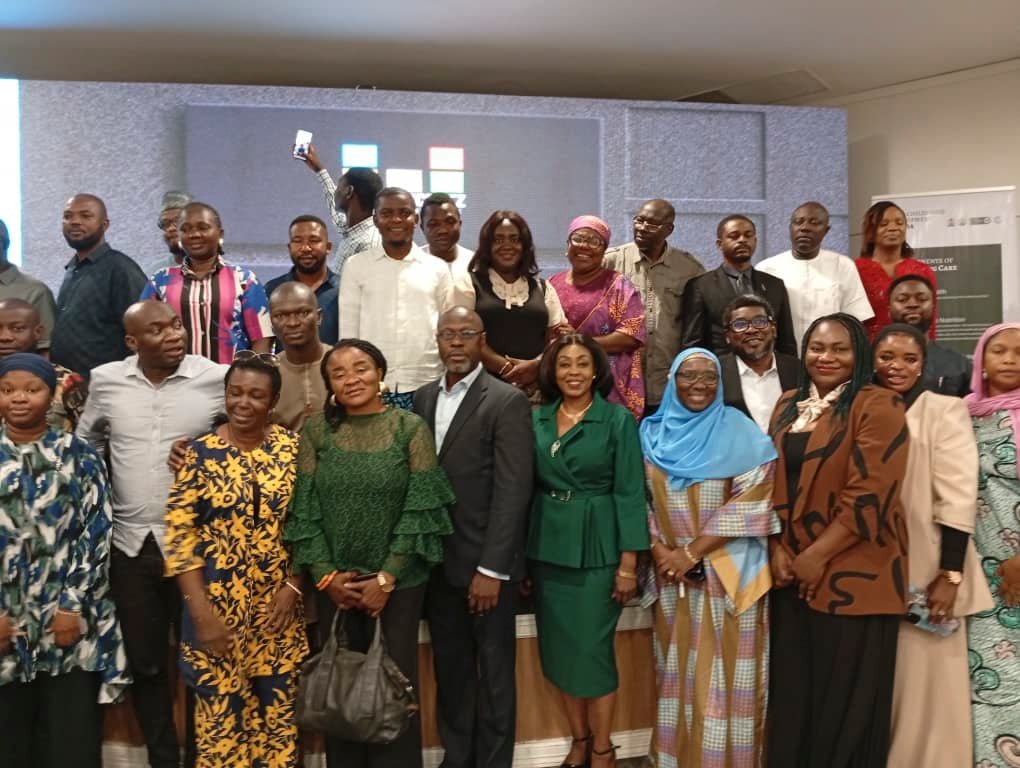
The World Bank has urged unified government action across sectors and tiers of government to strengthen early childhood development in Nigeria, stressing that coordinated investment in the first five years of life is critical to improving the country’s human capital outcomes.
The World Bank Task Team Leader, Early Childhood, Dr. Ritgak Tilley-Gyado, made the call during a consultation workshop with Civil Society Organisations and the media as part of the World Bank’s Early Childhood Development Inception Mission.
Tilley-Gyado said the scale of Nigeria’s child population made coordinated action urgent, noting that the country has about 38 million children under the age of five.
“What this agenda says is that the effort is to coalesce all of government horizontally across sectors, vertically across the four tiers of government,” she said.
According to her, investments in healthcare, nutrition, responsive caregiving, parenting, protection and early learning during the formative years could significantly influence children’s educational outcomes, lifetime earnings and eventual contribution to national productivity.
She said the greatest opportunity to improve Nigeria’s human capital lies with children in their early years because their physical growth, upbringing and development can still be significantly influenced through appropriate interventions.
“The flow is where the opportunity is, those that are born today, those that are still under age five, whose upbringing you can still influence, whose physical growth you can still influence,” Tilley-Gyado said.
She called for an all-of-society approach involving governments at all levels, development partners, civil society organisations, traditional and faith institutions, the private sector and communities.
The World Bank official also stressed the importance of social accountability, describing civil society organisations as a critical voice of citizens and an important mechanism for ensuring that government and development partners fulfil their commitments to child development.
She added that the initiative would prioritise disability inclusion, environmental safeguards and the protection of vulnerable populations as Nigeria strengthens its early childhood development interventions.
Speaking at the engagement, the National Coordinator, Open Government Partnership, Dr. Gloria Ahmed, described early childhood development as an investment in Nigeria’s human capital and future prosperity rather than merely a social intervention.
“Early childhood development is a critical foundation for the future of every nation. It is not merely a social intervention, it is an investment in human capital development and in the future prosperity of any nation,” she said.
Ahmed said effective early childhood development delivery required evidence-based planning, adequate financing, effective implementation and transparent monitoring.
She said open governance principles, including transparency, accountability, citizen participation and inclusive decision-making, were essential to ensuring effective implementation of programmes targeting children.
According to her, civil society organisations were strategically positioned to amplify the voices of parents, caregivers and children, monitor service delivery and expenditure, promote public awareness and hold institutions accountable for commitments made towards child development.
Also speaking, a Neurodevelopmental Paediatrician at Obafemi Awolowo University, Ile-Ife, Prof. Oluwatosin Olorunmeteri, said the first five years of a child’s life were critical to brain development, learning and the acquisition of physical, emotional and communication skills.
She explained that the quality of care and experiences children received during the period significantly shaped their capacity to learn and develop later in life.
Olorunmeteri identified good health, adequate nutrition, responsive caregiving, safety and security, and opportunities for early learning as essential components of nurturing care.
She warned that hunger, violence, neglect, infections and toxic stress could negatively affect children’s development.
“Only about 47.7 per cent of Nigerian children are developing on track, with gaps also recorded in literacy, numeracy and executive functioning,” she said.
The paediatrician called for stronger multisectoral collaboration among government, civil society organisations, development partners and communities to address challenges confronting children and strengthen existing interventions.
“We shall invest to build stronger foundations together; sustained investment in the early years is essential to building the human capital required for Nigeria’s future development,” she added.
The consultation underscored the need for coordinated, accountable and sustained investment across health, education, nutrition, social protection and other sectors to improve outcomes for Nigeria’s youngest population.
WATCH TOP VIDEOS FROM NIGERIAN TRIBUNE TV