

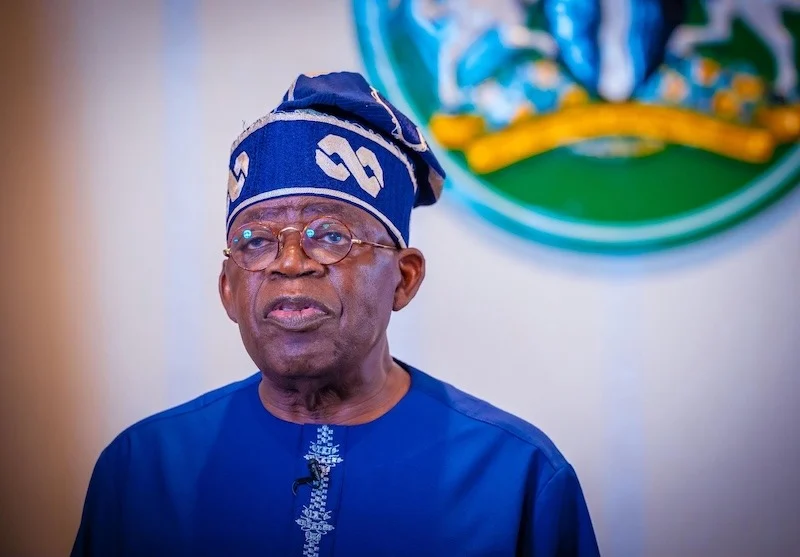
President Bola Tinubu and governors in the North-Central geopolitical zone have called for stronger intelligence sharing and collaboration among states, communities and security agencies to tackle the region’s worsening insecurity.
The call was made on Monday at the 2026 North-Central Regional Security Summit in Makurdi, Benue State, where stakeholders also urged political leaders to set aside their differences and work together to address banditry, kidnapping, farmer-herder conflicts and other security threats.
Tinubu, who spoke on the theme of the summit: “Collaborative Approaches to Strengthening Security and Regional Stability,” particularly tasked traditional and religious leaders to serve as the first line of early warning and trusted voices of reconciliation in their
Represented at the event by the Secretary to the Government of the Federation, George Akume, the President admonished Nigerians to share intelligence with security agencies and not to shield criminals based on kinship or sentiment.
While admonishing women and youths to take their rightful place at the centre of peace-building efforts, the President also urged development partners and the private sector not to see the North Central as a region requiring assistance but as an investment destination with enormous economic potential.
Tinubu said, “Insecurity transcends state boundaries and institutional mandates, requiring security agencies and communities to overcome rivalry, duplication of efforts and the withholding of vital information.
“No single agency, no single tier of government and no single community can secure this region acting alone. Insecurity does not respect state boundaries or agency mandates.
“Criminals move freely across local government areas while our responses are too often slowed by rivalry, duplication and the withholding of information. That must end.”
The President said that his administration had strengthened the nation’s security architecture through enhanced collaboration among the Armed Forces, Nigeria Police Force and intelligence services, as well as the acquisition of new platforms and advanced capabilities for the military.
He further stated that his administration was not only rebuilding the nation’s indigenous defence industry through the Defence Industries Corporation of Nigeria Act, but also improving the welfare of troops to enhance their operational effectiveness.
The President, who applauded security agencies for their fight against terrorists and other criminal elements in the country, stated that terrorist commanders and their lieutenants had been neutralised, with thousands of fighters surrendered, captives rescued and normalcy restored to several communities.
Tinubu, who identified some factors sustaining violent disputes to include struggle over land and water, climate change, desertification, unresolved land-use issues, weak local dispute-resolution mechanisms and the proliferation of illicit weapons, stressed the need to address those factors he said were fuelling insecurity.
“Military action alone will not deliver lasting peace to the North Central. Force can suppress violence; it cannot resolve the grievances that produce it,” he said.
The President said that his administration’s response would continue to combine kinetic operations with developmental interventions.
According to him, the Federal Government’s efforts through the Ministry of Livestock Development to transition from open grazing to modern, settled livestock production were part of measures to protect farmlands, improve pastoral livelihoods and remove a major trigger of conflict.
He also highlighted the Reclaiming the Ungoverned Space for Economic Benefits Programme of the Ministry of Defence, which is designed to deploy the experience of retired military personnel towards securing and reviving communities recovering from violence.
Tinubu said investments in irrigation, mechanised agriculture, rural roads and access to credit under the Renewed Hope Agenda were aimed at transforming the region’s vulnerabilities into economic opportunities.
While charging the traditional rulers and religious leaders, the President said, “To our revered traditional rulers and religious leaders, you hold an authority that no uniform confers.
“You know your communities intimately. You know when a stranger arrives, when a young man falls into bad company, and when a quarrel between two families is about to become a conflict between two peoples.
“I ask you to be our first line of early warning and our most trusted voice of reconciliation.”
He also urged them to firmly reject inflammatory rhetoric from whatever quarters, warning that the country had suffered considerably from reckless rhetoric around ethnic, religious and other differences.
The President also admonished communities to take greater responsibility for their security by providing timely information to security agencies and refusing to harbour criminal elements.
While reminding women of their critical role in peace-building, the President said they should be placed at the centre rather than the margins of security conversations.
He also assured youths of his administration’s commitment to expanding economic opportunities and creating livelihoods capable of insulating them against recruitment into criminality and violent groups.
The President commended the Ministry of Defence and the Office of the Senior Special Assistant to the President on Community Engagement, North Central, for organising the summit, which he said is the second in a series of regional security engagements following the South East Regional Security Summit held in Umuahia on July 30, 2026.
While commending the host state and government, Tinubu urged participants, including governors, ministers, Service Chiefs, traditional and religious leaders, civil society organisations, women, youths and private sector representatives, to engage candidly and constructively and offer practical solutions to the region’s security challenges.
In his welcome speech, Benue State Governor, Hyacinth Alia, described the theme of the summit as apt, considering the insecurity ravaging parts of the country.
According to him, the state and other parts of the North Central had continued to face security challenges, which he said required a collaborative security strategy.
He said, “It is my considered position that our diversity should be a source of strength rather than weakness. What are those things that unite us, and what are those things that divide us and breed insecurity?
“The issues are multidimensional, and as such, the solution must be collaborative. I have said this in different rooms, and I will say it again here: the moment we set aside our differences to confront the enemy of insecurity, half the battle is already won.”
He, however, added that the collaboration could not just live in communiqués but must reach the traditional institutions and community leaders.
He emphasised that the North Central has the highest level of ethnic diversity in the country, stating that regardless of the plurality, the underlying culture should align toward peace.
“Our heritage does not breed violence, which is reflected in the proud sobriquets of our states: Benue as ‘The Food Basket of the Nation’, Kogi as ‘The Confluence State’, Kwara as the ‘State of Harmony’, Nasarawa as the ‘Home of Solid Minerals’, Plateau as the ‘Home of Peace and Tourism’, Niger as ‘The Power State’, and Abuja as the ‘Centre of Unity’,” he said.
Alia commended the Ministry of Defence in collaboration with the Office of the Senior Special Assistant to the President on Community Engagement for the initiative.
He warned that long‑term solutions to insecurity must extend beyond military deployments to include traditional rulers, border communities and grassroots intelligence‑sharing.
Framing the North Central’s stability as vital to national welfare, the governor highlighted the region’s role in food production and mineral resources, warning that insecurity there threatens food security and supply chains nationwide.
“When the North Central is insecure, it is not only our problem; the whole country feels it on its dining table,” he said.
Nasarawa State Governor, Abdullahi Sule, cautioned against the continued politicisation of insecurity in the North Central states.
He lamented the lingering tiff between Akume and Alia and appealed that, in the interest of peace in the geopolitical zone, the two leaders should close ranks.
The governor stressed the need for stakeholders to separate politics from insecurity, arguing that leaders in the North Central should build trust among themselves.
“We leaders, particularly between Benue and Nasarawa states, must develop trust,” he said.
Sule further noted that the political differences had continued to create windows for militants to come in and carry out their nefarious acts, emphasising the need to strengthen collaboration between the North Central states and security agencies.
He recounted his personal experience in 2019 when he reached out to the then governor of Benue State, despite political differences, to establish a working relationship between Nasarawa and Benue states, noting that the collaboration helped to subdue security challenges between the two states until 2023, when the problems resurfaced.
He said, “I recall that my predecessor Tanko Al-Makura in the twilight of his administration was not on good terms with Governor (Samuel) Ortom, but when I came on board, I cultivated a good relationship with him. I visited him, and we held peace meetings at Yelewata.
“Following that relationship, the attacks reduced drastically from 2019 to 2023 until Governor Alia assumed office, and it heightened again.
“I will be stupid to accommodate militants that would attack Benue State or any North Central state. We must build trust and share intelligence.
“We now have more resources; we should deploy them to support security agencies to acquire technological gadgets, as no amount of money is too much to secure the lives of the people.”
On his part, Plateau State Governor Caleb Muftwang frowned on the mischaracterisation of attacks on farmers as herders/farmers clash, insisting that it was an invasion by the former on the latter.
Muftwang said every state has its security priorities and should put in place a framework to tackle it, positing that there must be truthfulness and honesty as banditry, kidnapping and herders’ attacks continue to constitute a national security threat.
He said, “We must trace them to their hideouts and stop them. We are too reactionary, and our borders are porous.
“We should establish structured community networks within the localities that should be armed as the first line of defence.”
Mutfwang called for a regional security strategy to tackle the rising wave of insecurity across the North Central geopolitical zone.
“The scale and pattern of insecurity in the North Central required states in the region to move beyond isolated responses and adopt a united and intelligence-driven approach,” he said.
The governor challenged the common narrative that the violence was limited to farmer-herder clashes.
“The nature of attacks recorded in several communities suggested a more organised threat that must be treated with the seriousness it deserved,” he said.
The governor described the situation as “an invasion of communities and a threat to national sovereignty, particularly where vulnerable populations were deliberately targeted and displaced from their ancestral homes.”
Reflecting on Plateau, he noted that “many displaced persons remained unable to return to their communities because the security conditions necessary for safe and sustainable resettlement had yet to be fully established.”
He also called on security agencies to change tactics, adding, “Security agencies must move beyond reactionary responses and trace attackers to their sources and routes.”
The governor raised concerns over infiltration routes into Plateau, saying attackers were exploiting porous borders and difficult-to-monitor corridors through connections between the North-West, Taraba and Nasarawa states.
He, therefore, called for “strengthened intelligence gathering, inter-state cooperation and coordinated operations among security agencies to identify and disrupt the routes used by attackers.”
Former Deputy Governor of Plateau State, Paulen Tallen, proposed the establishment of a North Central Border Coordination Committee, noting that collaboration, sincerity and political will would help to stem the high rate of insecurity in the region.