

The Southern and Middle Belt Leaders Forum has rejected the Federal Government’s proposed pilot ranching scheme in parts of the Middle Belt, describing it as an attempt to take over ancestral lands under the guise of livestock development.
The forum, in a statement issued on Wednesday and signed by its Chairman, Oba Oladipo Olaitan; President of the Middle Belt Forum, Dr Bitrus Pogu; President-General of Ohanaeze Ndigbo Worldwide, John Azuta-Mbata; and National Chairman of PANDEF, Amb Godknows Igali, also urged communities and governments in the Southern states to prepare to resist the policy.
The SMBLF said it was particularly concerned that the proposed pilot areas included Nasarawa, Plateau, Benue, Southern Kaduna, Taraba and the Federal Capital Territory.
The group said, “The SMBLF is alarmed by the audacious attempt by the Federal Government to take over lands belonging to ethnic communities in the Middle Belt under a spurious ‘pilot scheme’ being introduced in the name of a New National Livestock Policy.”
The development comes barely days after the Middle Belt Forum rejected the Federal Government’s renewed ranching policy, describing the proposed allocation of land in the region for livestock production as a potential land-grabbing scheme.
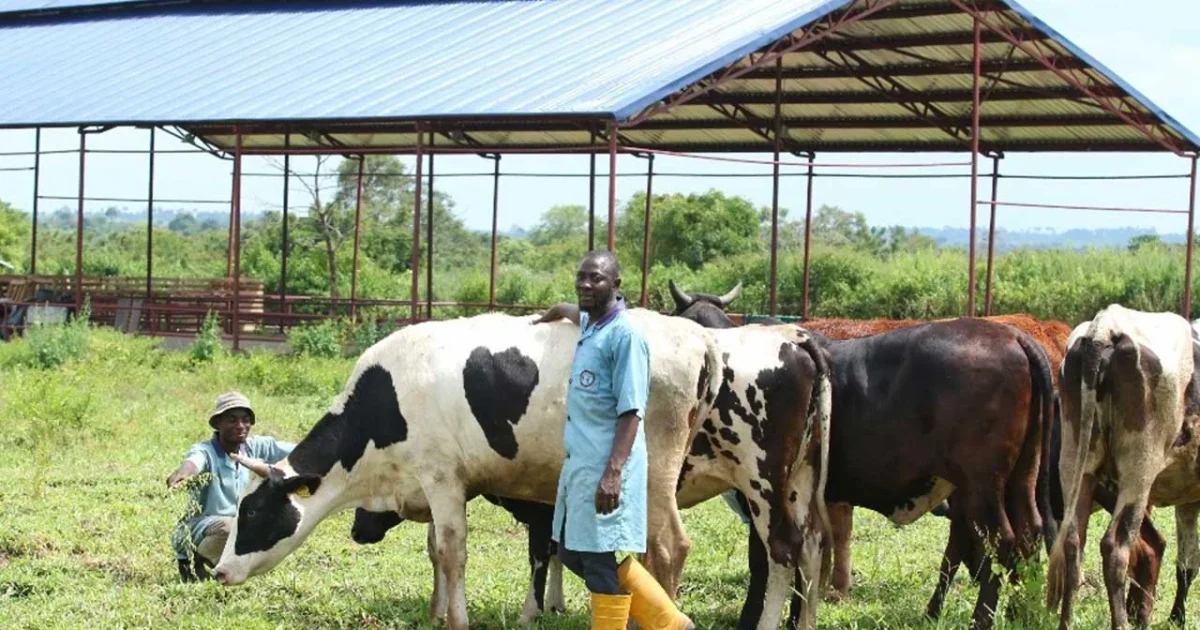
The PUNCH reports that the Federal Government has said the ranching initiative is aimed at modernising livestock production, reducing cattle movement and addressing the persistent farmer-herder crisis.
The proposed programme reportedly targets conflict-prone areas including Benue, Plateau, Nasarawa, Kaduna, Adamawa and the FCT, with the Wase Grazing Reserve in Plateau State serving as a pilot model.
However, the SMBLF questioned why the pilot was concentrated largely in the Middle Belt, despite what it described as the availability of sparsely populated land in parts of the far North.
“It is striking that this experiment is being concentrated almost entirely in the Middle Belt, despite the vast expanses of sparsely populated and unused land available in many parts of the far North,” the forum said.
The leaders insisted that they were not opposed to ranching or the development of Nigeria’s livestock industry, but objected to what they described as the “opaque, coercive and discriminatory” manner in which the policy was being pursued.
The forum said, “Ranching is an economic enterprise that is privately driven. The government cannot disguise compulsory land acquisition for specific economic actors as public interest.”
The SMBLF further alleged that the policy could ultimately create permanent settlement zones for nomadic Fulani herdsmen, an allegation the Federal Government and supporters of the ranching initiative would need to address.
“The SMBLF deeply suspects that the true aim of this policy is the creation of permanent settlement zones for nomadic Fulani herdsmen,” the statement said.
The forum also linked its opposition to the history of farmer-herder violence and displacement in the Middle Belt, arguing that communities affected by attacks should not lose additional land to a government-backed ranching programme.
“They cannot be handed the lands of their victims as a reward for their heinous crimes,” the leaders said.
The forum recalled previous Federal Government initiatives, including the controversial RUGA and cattle colony proposals, which were resisted by sections of the country over concerns about land ownership, settlements and demographic changes.
It warned that the current ranching scheme, if allowed to proceed without adequate consultation, could generate fresh tension in affected communities.
The SMBLF also raised legal questions over land acquisition, arguing that the Land Use Act of 1978 should not be interpreted as a licence for arbitrary acquisition of community land.
Under the Land Use Act, land administration involves statutory and customary rights of occupancy, while the law provides for revocation of rights of occupancy in specified circumstances, including overriding public interest.
The forum, therefore, demanded full disclosure by the Federal Government of the proposed ranching sites, legal instruments backing their acquisition, ownership structures, beneficiaries, size of the lands involved, security arrangements and sources of funding.
It said no implementation should proceed until the rights and interests of affected communities were clearly protected.
“Until these questions are answered transparently and the rights of affected communities are fully protected, the SMBLF rejects the proposed ranching scheme in the Middle Belt and the South,” the leaders declared.
The forum warned that it would resist any attempt to seize community lands under the guise of livestock development, while urging Southern states and communities to remain vigilant against any future expansion of the policy.
The Federal Government’s ranching proposal has already generated controversy, with proponents arguing that modern ranching could help reduce farmer-herder clashes and transform Nigeria’s livestock sector, while opponents fear that poorly designed land acquisition could worsen existing tensions.
The SMBLF maintained that livestock development could be pursued without dispossessing communities of their ancestral lands.
“Modernisation must not mean dispossession,” the forum said, insisting that any sustainable livestock policy must be transparent, voluntary where applicable and developed in consultation with communities whose lands and livelihoods could be affected.