

By: Bode Opeseitan
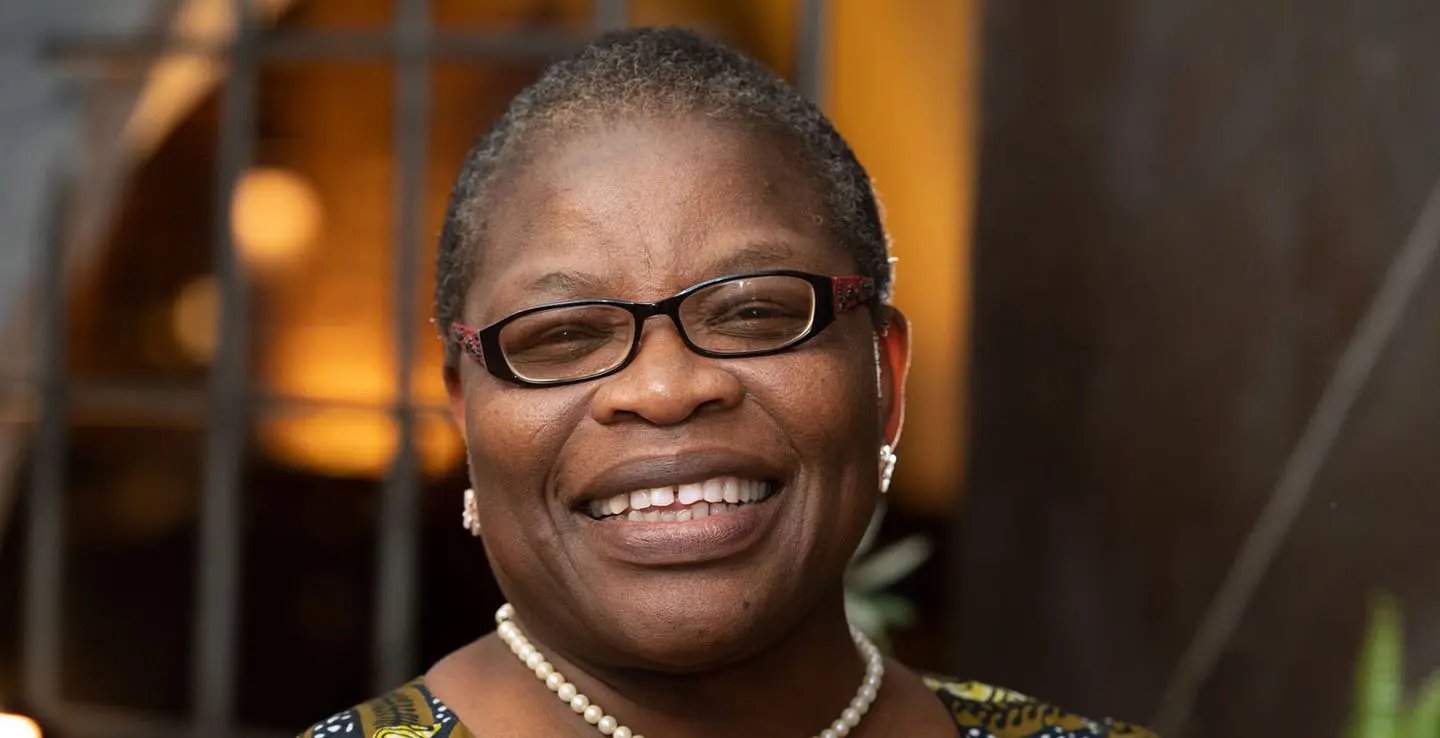
Public debate thrives on disagreement, but it falters when those who understand global development finance choose sentiment over process. Dr Obiageli Oby Ezekwesili, a former Vice President at the World Bank, knows precisely how sovereign credit facilities are structured, vetted and guaranteed. That is why her description of Nigeria’s £746 million ports upgrade as “dodgy” is so disheartening. The facility she condemns follows the same internationally recognised procedures she once supervised and defended.
What Nigerians deserve is clarity, not melodrama. The facts, quiet and stubborn, contradict her claim at every turn.
The Process She Criticises Is the Same Process She Once Supervised
A sovereign-backed UKEF buyer credit facility, such as the Nigeria ports rehabilitation loan, follows a structured governance sequence. It requires integration with the borrower’s Debt Management Office (DMO) and macroeconomic oversight, alongside environmental and social impact assessments. In Nigeria’s case, this involves legislative inclusion in the National Assembly’s external borrowing plan, rigorous independent technical due diligence, and currency risk management. The sequence concludes with UKEF guarantee approval and financial close by the mandated lead arranger, Citibank.
This is not unusual. It is the same process used for port, rail, energy and aviation projects across Africa, Asia and Latin America. It is the same process Dr. Ezekwesili presumably defended repeatedly during her tenure at the World Bank. To now describe it as “dodgy” is not an argument. It is an abandonment of the standards she once championed.
The Terms Are Public and They Are Better Than Nigeria’s Market Alternatives
The March 19 joint statement published the core terms. They include a tenor of 10 to 12 years, a 3-year grace period, an interest rate of SOFR plus 2.75%, a full UKEF guarantee and a 20% UK content requirement worth about £236 million.
Nigeria’s last Eurobond carried a spread of 5.5% with no grace period. This facility costs roughly half that. These are not predatory terms. They are exceptional by African sovereign debt standards. A former World Bank Vice President knows this. Which raises the question: why imply opacity where transparency already exists.
The UK Content Requirement Is Standard Export Credit Practice
Export credit agencies exist to support domestic exporters. UKEF, EXIM China, SACE Italy, JBIC Japan and US EXIM all operate on the same principle. In fact, it is the defining characteristic of Export Credit Agencies (ECAs) world-wide. A 20% content requirement is therefore not unusual. It is modest. It is the lowest entry point allowed under UKEF’s regulations.
Besides, Nigeria consumes more than 11 million tonnes of steel annually and produces barely a quarter of that. The 120,000 tonnes from British Steel represent less than 1.5% of the annual import gap. The real scandal is not imported billets. It is Ajaokuta’s paralysis, which the government is now attempting to fix. Criticising the symptom while ignoring the disease is not policy analysis.
The Ports Will Pay for Themselves
Apapa and Tin Can Island are revenue engines, not speculative assets. According to the NPA’s 2025 performance reports, the two ports generated more than ₦1 trillion in the first quarter alone and about ₦2.4 trillion in the first 10 months of the year. The upgrade is designed to cut vessel turnaround from 7 to 10 days to under 48 hours.
Each idle day costs the economy about ₦45 billion. Customs automation is projected to add about ₦300 billion annually. The Ministry of Finance projects that incremental revenue will cover more than 60 percent of annual debt service.
This is what financiers call a self-liquidating asset. It is the opposite of a debt trap.
Nigeria Achieved What Many African Countries Could Not
Securing international infrastructure financing is a highly competitive and fragile process for developing states. In recent timelines alone, Mozambique lost up to $1.15 billion in UKEF-backed financing for its northern energy terminal infrastructure due to security force majeure. Ghana saw over $300 million in expected bilateral project credit stalled amid rigid debt-restructuring negotiations. Zambia faced a complete freeze on hundreds of millions in multilateral project financing following its sovereign default, while Zimbabwe was entirely cut off from standard China EXIM Bank rail and transport lines of credit due to decades of unaddressed defaults.
Nigeria closed a £746 million UKEF guaranteed facility, one of the strictest export credit agencies in the world. That is not a failure of governance. It is evidence of regained credibility.
The Real Issue Is Not Debt. It Is Selective Outrage
Nigeria’s debt profile deserves scrutiny. But scrutiny must be honest.
Dr Ezekwesili did not raise alarms when previous administrations contracted commercial loans at spreads exceeding 6%. She did not describe those facilities as “dodgy”.
Yet a loan with better terms, clearer structure and stronger guarantees is suddenly a national betrayal.
This inconsistency is not analytical. It is political. Dr Ezekwesili went as far as calling on the President, Asiwaju Bola Ahmed Tinubu, to terminate the facility. Her recommendation follows a familiar pattern. Stop, by any means, anything that can lead to Nigeria’s progress under Tinubu and present the obstruction as a defence of the public good. It is the same stale script that was deployed in the failed attempt to halt the Lagos Calabar Coastal Road and several other national projects. The method is predictable. Dress political resistance in the language of civic virtue and hope the public does not examine the facts closely.
A Due Process Contradiction That Cannot Be Ignored
It is difficult to reconcile Dr Ezekwesili’s present posture with the principles she once embodied. She built her public reputation on the creed of due process, yet she has chosen to attack a project that followed due process at every stage. The UKEF facility passed debt sustainability tests, environmental and social assessments, parliamentary scrutiny and independent technical due diligence. These are the very safeguards she once insisted upon. A former custodian of due process should be the first to acknowledge compliance, not the first to dismiss it.
When Principles Become Selective
The contradiction becomes sharper when one recalls her defence of actions that clearly violated due process. The Natasha Akpoti-Nduaghan episode remains a troubling example. A Senator of the Federal Republic violated standing rules binding on all members of the Red Chamber and was suspended for 6 months. She made unsubstantiated allegations of sexual harassment against the Senate President and even reported Nigeria to the International Parliamentary Union. The courts ruled against her. Yet Dr Ezekwesili chose to stand firmly by her, appearing at the National Assembly as part of her defence team. Up till now, she has not apologised to the nation for that misjudgement. It is difficult to understand how a once principled advocate of due process became a defender of its most flagrant breach.
A Legacy That Deserves Honest Context
Dr Ezekwesili’s early work in the Budget Monitoring and Price Intelligence Unit earned her admiration, but it was not without controversy. The ICPC investigation into the Education Reform Programme funds, the allegations of selective enforcement within the Due Process office and the criticism that the BMPIU’s centralisation enabled presidential discretion all formed part of the public record. None of these resulted in a conviction, but they demonstrated that due process under her watch was not always as absolute as the public narrative suggested. This history matters because it shows that due process is a discipline, not a slogan. It requires consistency, not selective deployment.
Leadership Requires Consistency, Not Ethnic or Partisan Filters
Nigeria’s development challenges are too serious for commentary that shifts with political winds. When leaders who understand global finance choose to weaponise it for domestic politics, the public loses clarity. The country loses trust. The debate loses integrity.
The ports upgrade is not perfect. No infrastructure project is. But it is transparent, economically rational and aligned with global best practice. To describe it as “dodgy” is to mislead Nigerians who rely on experts for truth, not soap-box opera.
Closing Reflection
Nigeria deserves criticism grounded in fact, not sentiment. When those who once upheld global standards of transparency now describe standard financing structures as “dodgy”, the inconsistency speaks louder than the argument. The arithmetic is clear, the terms are public and the ports will pay for themselves. This is progress with a price tag the country can afford.
World Bank Group
World Bank Africa
Citibank US
#Nigeria
#Ports
#RenewedHope
#UKEF
#loans