

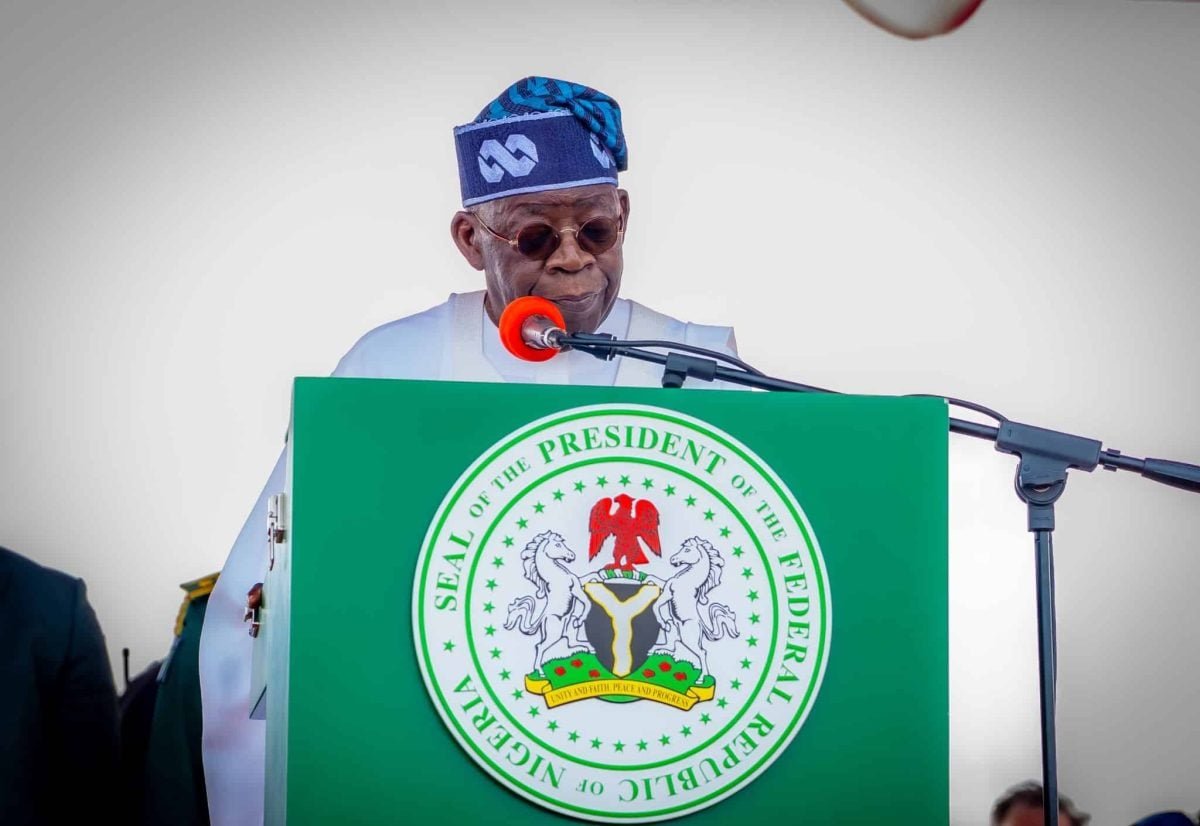
PRESIDENT Bola Tinubu’s directive to the Economic and Financial Crimes Commission (EFCC) to unfreeze the Osun State government’s statutory allocation account shortly before the August 15 governorship election doused political tension and created a more conducive environment for a peaceful poll, the Peering Advocacy and Advancement Center in Africa (PAACA) and Legis360, have said.
The organisations also said the president’s intervention boosted his democratic credentials, particularly given the politically sensitive timing of the EFCC’s decision to freeze the account.
Presenting the findings of their independent assessment of the election in Abuja, Executive Director of PAACA, Chief Ezenwa Nwagwu, said Tinubu’s decision to reverse the account freeze was significant in calming tension in the state ahead of the election.
The EFCC had frozen the state government’s account about 10 days before the poll over alleged mishandling of approximately N11 billion in public funds, a development that generated political controversy because of its proximity to the election.
Nwagwu said the president’s intervention helped lower the political temperature in the state and contributed to a more peaceful electoral environment.
According to him, the decision demonstrated Tinubu’s commitment to democratic principles and strengthened his democratic credentials.
He said the timing of the account freeze had heightened political sensitivities in Osun, making the subsequent directive to unfreeze the account particularly important in restoring calm ahead of the election.
The assessment, however, identified voter inducement, low turnout, violence and inadequate accessibility provisions for persons with disabilities as major concerns arising from the election.
PAACA and Legis360 reported that voter inducement or interference by party agents was recorded at about two in five polling units observed during the election.
They said the finding made vote-buying the major conduct concern arising from the poll, despite the near-universal availability of essential election materials at polling units observed.
The principal challenge was, therefore, not widespread administrative failure but the persistence of voter inducement.
“The principal threat to this election was not administrative failure, but the quiet commercialisation of the ballot, which persists largely because it is so rarely prosecuted,” they said.
The observers also reported that only about 43 percent of registered voters were accredited to vote, meaning that roughly three in five registered voters stayed away from the election.
Despite the concerns, the organisations said their independent review of polling-unit results published by the Independent National Electoral Commission (INEC) confirmed the outcome declared by the commission.
Nwagwu said the independent verification demonstrated that the result announced by INEC was supported by the underlying polling-unit records.
“The good news for Osun’s voters is that this result can be independently verified, and it holds,” he said.
He, however, cautioned that the credibility of the final tally should not be confused with the overall quality of the electoral process.
WATCH TOP VIDEOS FROM NIGERIAN TRIBUNE TV