

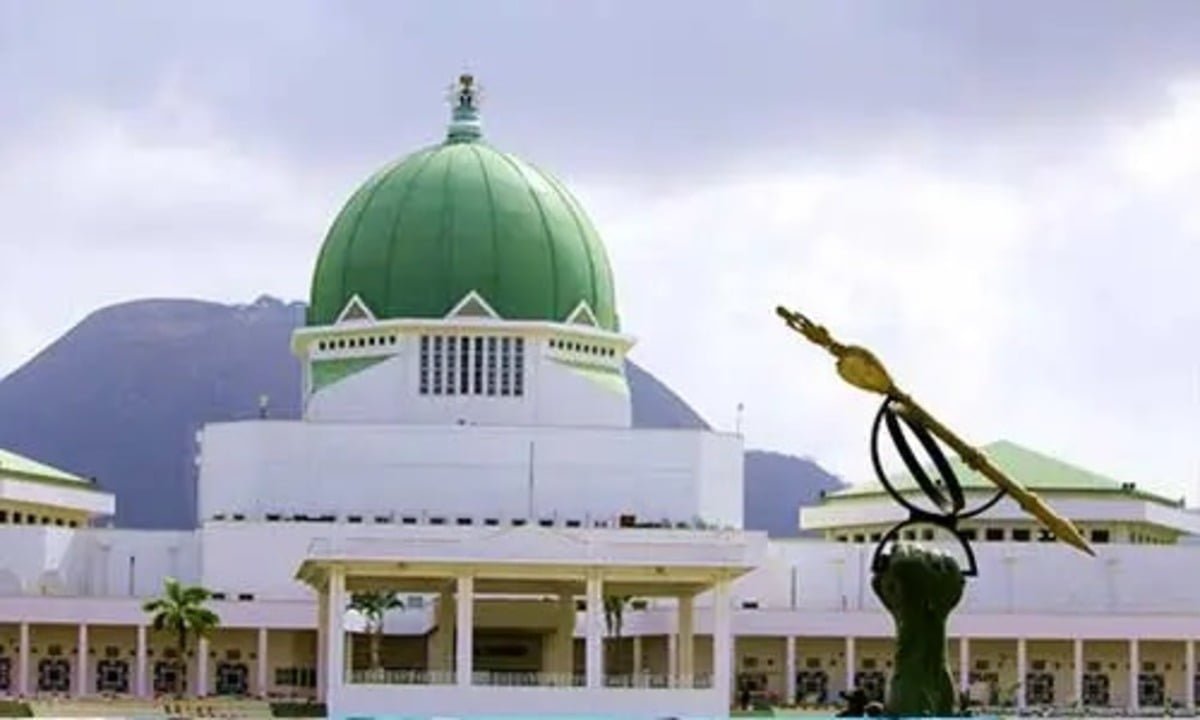
•Ask Akpabio, Abbas to reconvene, set up conference committee
Fresh concerns have continued to trail the delay in concluding the legislative process on the State Police bill, with Civil Society Organisations (CSOs), and other stakeholders urging the leadership of the National Assembly to constitute a conference committee to harmonise the versions passed by the Senate and House of Representatives before transmitting a single text to State Houses of Assembly.
The call followed the failure of the Senate and House leadership to resolve their differences before embarking on a two-month annual recess, despite the House version containing far-reaching constitutional amendments designed to strengthen the autonomy, funding, accountability and operational independence of State Police Services.
Executive Director of the Civil Society Legislative Advocacy Centre (CISLAC)/Transparency International in Nigeria, Auwal Musa Rafsanjani, said the differences between the two chambers should not be treated as mere drafting discrepancies, warning that transmitting conflicting provisions to states could create constitutional uncertainty. “There must be one clear, identical and legally coherent constitutional alteration proposal capable of being transmitted to the State Houses of Assembly,” he said.
Rafsanjani, while acknowledging the urgent need to reform Nigeria’s centralised policing system amid insecurity, terrorism, banditry, kidnapping and communal violence, urged the National Assembly to activate a transparent harmonisation process and publish the final text for public scrutiny. He also called for the concerns of the Minority Caucus to be addressed, stressing that “Parliamentary legitimacy depends not only on the number of votes secured, but also on the integrity of the process through which decisions are reached.”
He warned that the urgency created by insecurity and the approaching 2027 elections must not lead to a poorly designed State Police system, particularly one susceptible to political capture. “One of CISLAC’s concerns is the possibility that State Police could be converted into instruments of political intimidation by governors or ruling parties,” Rafisanjani said, insisting that safeguards must prohibit deployment against political opponents, journalists, CSOs, protesters and opposition parties.
Speaking with the Nigerian Tribune, National Coordinator, Coalition of Northern Groups (CNG), Jamilu Charanchi, urged the two chambers to put aside political differences and reconcile their positions.
ALSO READ: How Accord, APC, ADC shared vote percentage in #OsunElectionResults so far
Also, Senior Programme Officer, Centre for Democracy and Development (CDD), Austin Aigbe, urged members of the ruling All Progressives Congress (APC) in the House to accommodate opposition concerns, warning that failure to build consensus could further delay the process. “State policing ought to be an organising point for all the members of parliament, but there are suspicion about the objective and the idea behind its function,” he said.
Aigbe cautioned against assuming that State Police would be operational in time for the 2027 elections, noting that even after passage and presidential assent, states would still have to establish the necessary structures.
The House version, produced from the recommendations of the Special Ad hoc Committee on Constitution Review chaired by the Deputy Speaker, Honourable Benjamin Kalu and subsequently adopted by the Committee of the Whole, contains specific provisions intended to prevent such interference. In extending constitutional independence provisions under Section 158, the House proposed that the Federal Police Service Commission and National Police Council, in exercising their constitutional powers, “shall not be subject to the direction or control of any other authority or person, including the president.” It similarly proposed that State Police Service Commissions should not be subject to the direction or control of any authority or person, “including the governor.”
Another major amendment seeks to guarantee financial independence for State Police Services. The revised provision states that, “Any amount standing to the credit of a State Police Service established for a state shall be paid directly to the Service.” The committee considered direct payment essential to preventing financial control from being used to weaken or manipulate state policing, while retaining the requirement for adequate, sustainable and accountable funding.
The House also proposed strict limits on federal intervention in state policing under its revised Section 214. It provides that “The Federal Police shall not deploy or initiate any intervention within a state unless it has first exhausted all necessary operational and technical support to the State Police Service, and established that the intervention is an absolute measure of last resort.” Any intervention must be “strictly temporary, necessary and limited to the specific territory, functions and timeframe required,” with its legality, scope, duration and conduct subject to judicial review.
On command and control, the House replaced the designation “Commissioner of Police” with “Chief of Police of the State” and proposed under revised Section 215 that: “A State Police Service shall be headed by the Chief of Police of the State appointed by the governor of the state on the recommendation of the National Police Council, subject to confirmation by the House of Assembly of the state.” It further prohibited presidential or gubernatorial directives requiring officers to arrest, detain, investigate, refuse to investigate, deploy or use force against a named person, political party, association or class of persons except in accordance with the law.
The lawmakers also sought to protect police officers from unlawful orders, providing that an officer may request the appropriate Police Service Commission to review any directive considered unlawful or inconsistent with national minimum standards.
A particularly significant amendment concerns the composition of the National Police Council. Although, the president would remain chairman, the proposed membership would include: Presiding officers of the National Assembly, Attorney-General of the Federation, Attorneys-General of the 36 states, chairman of Federal Police Service Commission, Chairmen of State Police Service Commissions, representatives of the National Human Rights Commission and Public Complaints Commission, as well as the secretary to the council. The proposed structure, therefore, broadens representation beyond the federal executive, while giving the council responsibility for national standards and coordination.
However, the breadth of these provisions has widened the differences between the Senate and House versions, making harmonisation unavoidable. With the 2027 elections approaching and insecurity remaining a major national concern, stakeholders are now urging Senate President Godswill Akpabio and Speaker Abbas Tajudeen to reconvene the National Assembly and constitute the conference committee.
WATCH TOP VIDEOS FROM NIGERIAN TRIBUNE TV