

Bauchi State Government has declared an outbreak of cholera in the State, with sixteen people confirmed dead due to the situation.
The confirmation was contained in a leaked memo by the State Ministry of Health and Social Welfare, addressed to international donor partners, titled: “Declaration of Cholera Outbreak in Bauchi State,” dated 01-08-2026.
The memo reads: “To all Partners and Donor Agencies. Bauchi State Ministry of Health & Social Welfare wishes to inform the general public and our development partners, following an increase in reported cases of Acute Watery Diarrhea (AWD) and the laboratory confirmation of cholera cases, the Honourable Commissioner for Health & Social Welfare, based on the recommendation of the state epidemiology team and public health emergency operation center, has officially declared a cholera outbreak in the State.”
It further stated, “This declaration is made in line with the International Health Regulations (2005). the National Technical Guidelines for Cholera Preparedness and Response, and the established public health emergency management procedures of the Federal Ministry of Health & Social Welfare.”
Giving the cholera situation analysis, the Ministry stated that, “As of 31 July 2026, the State has recorded 398 suspected cholera cases across 13 Local Government Areas (LGAs). 16 mortalities have been recorded with a case fatality rate of (4%).”
The six most affected LGAs are Toro, with 231 cases; Alkaleri, 46 cases; Kirfi, 46 cases; Ganjuwa, 21 cases; Bauchi, 14 cases; and Tafawa Balewa LGA, 14 cases.
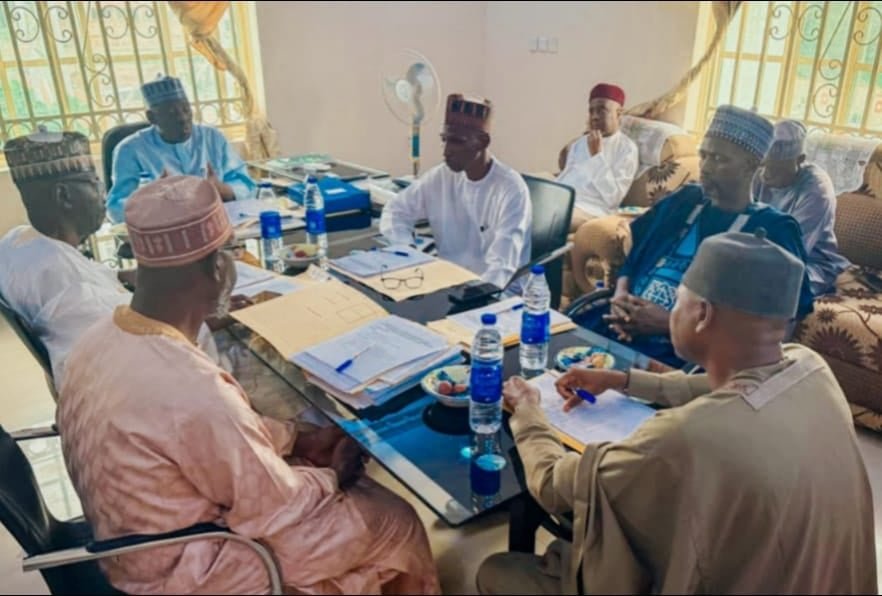
Meanwhile, Water, Sanitation and Hygiene (WASH) Desk Officers from eight LGAs of Bauchi State where cholera outbreaks have been reported have been trained on how to effectively prepare for and respond to the situation in a more professional manner.
The workshop on Case Area Targeted Intervention (CATI), on preparedness and response to the cholera outbreak in high-risk areas, was organised by the Bauchi State Government through the Rural Water Supply and Sanitation Agency (RUWASSA) and the United Nations Children’s Fund (UNICEF).
Speaking at the workshop, UNICEF Water, Sanitation and Hygiene (WASH) Specialist, Bauchi Field Office, Nambam Dawap said, “We are here to prepare response to possible cholera outbreak, we want to train the WASH Desk Officers from the Eight high risk LGAs to equip them on how to effectively respond.”
She added that, “UNICEF is focused on child survival, especially around the first 1,000 days of a child. Cholera is a fundamental concern when it comes to child survival, especially the 1,000 days that I mentioned earlier. Where water is not safe, where there is inadequate sanitation and poor hygiene, there is a very high risk for cholera outbreak and diarrhea and other water and sanitation related diseases.”
According to her, “UNICEF is focused on child survival around those days. And the reason why we are here is to talk about how we can reduce drastically the risks of a child to cholera and diarrhea infection. It’s not enough to have water for drinking. Water must be clean and safe, especially for children. Where water is provided, we must make sure that there are processes of testing and ensuring that water is safe and clean for children.”
Nambam Dawap added that, “For instance, you agree with me that some of the water that we have in our houses come from public water where we recirculate it and it goes through the drainages, what we call gutter. Those same drainages carry a lot of germs, water related diseases, and then high risk of contaminating that water.”
She added that, “That water goes straight into our house and then we take it and probably drink. That’s a very high risk for children. And we are saying that water should be clean. Talking about sanitation. Sanitation is very key, where there is inadequate or poor sanitation, there is a very high risk of cholera or diarrhea outbreak.”
According to her, “We are focusing on open defecation. Why are we focusing on open defecation? We are saying that there shouldn’t be open defecation. This is because research has shown that a gram of excreta openly carries millions of bacteria and viruses. And so that can lead to outbreak of cholera and diarrhea. That is a high risk for child dehydration and it will lead to possible death.”
“And so we are saying that people should have improved toilets and they are using it. And then let’s come to the section of hygiene. It’s also not enough to have a toilet and we are using it. Research, because of what I’ve explained earlier, the viruses and germs that excreta carries, hand washing is very important. When you wash your hands at critical times, we call them around after using the toilet, before feeding the baby, before serving food, after cleaning the baby’s poo, and so on. These are critical times that research have also shown that it can help reduce the risk of diseases by over 50% when hands are washed,” she added.
Nambam Dawap further said that, “And so for WASH, the connection is that we are promoting safe water, adequate sanitation, safe hygiene activities to ensure that children are kept safe, especially now that cholera is seasonal for the outbreak. Now this season should not end around only responding to cases and emergencies. When cases have reduced, we should go to the root cause of the problem, which I’ve mentioned some earlier, around washing of hands, using of toilet, and ensuring that water is safe for children.”
She stressed that, “We all have responsibility for that. Government has responsibility, CSOs have responsibility, caregivers and parents have responsibility to ensure that we tackle the issue. Processes of providing safe water, processes of ensuring that the water is safe, processes of behavior change, it doesn’t end at government policy.”
She added that, “Even where there is water, we should ensure that that water is clean. That’s around behavior change. So we are encouraging parents and everyone in this season of outbreak to ensure that all processes are carried out to ensure children are safe from the disease that come with the outbreak.”
Also speaking, Director of Sanitation and Hygiene, Rural Water Supply and Sanitation Agency (RUWASSA), Bala Zailani, said that, “This training is all about letting people to know where we are now concerning cholera. Already we have cases in Seven LGAs, so, we gathered all the WASH Desk Officers here to come and have a refresher session on the new ways to get prepared respond to emergency cases about outbreak.”
ALSO READ: Indian journalist sentenced to 10 years for rape
He added that, “We want them to go to the communities after the training and step down whatever they must have learnt in the 3 days. We have to do something to curtail the cholera disease.”
Bala Zailani assured that RUWASSA is fully prepared to respond to the cholera outbreak, saying part of the preparation was the training of the WASH Desk Officers from the LGAs.
According to him, “After the training, we will distribute ourselves to the LGAs then the high risk communities that are already affected and go from one place to another in order to stop the spread of the disease.”
On the remaining LGAs that are not yet affected, the Director said the Agency had written to them as well as sent cholera prevention kits to them to be fully prepared, embark on sensitisation, and improve WASH activities.
Some of the participants, Hauwa and Ibrahim, commended the organisers of the workshop, saying it came at the right time when there were outbreaks in some LGAs across the State.
Speaking variously, they said that they learnt new techniques and processes of preparing and responding to emergency cholera situations.
WATCH TOP VIDEOS FROM NIGERIAN TRIBUNE TV