

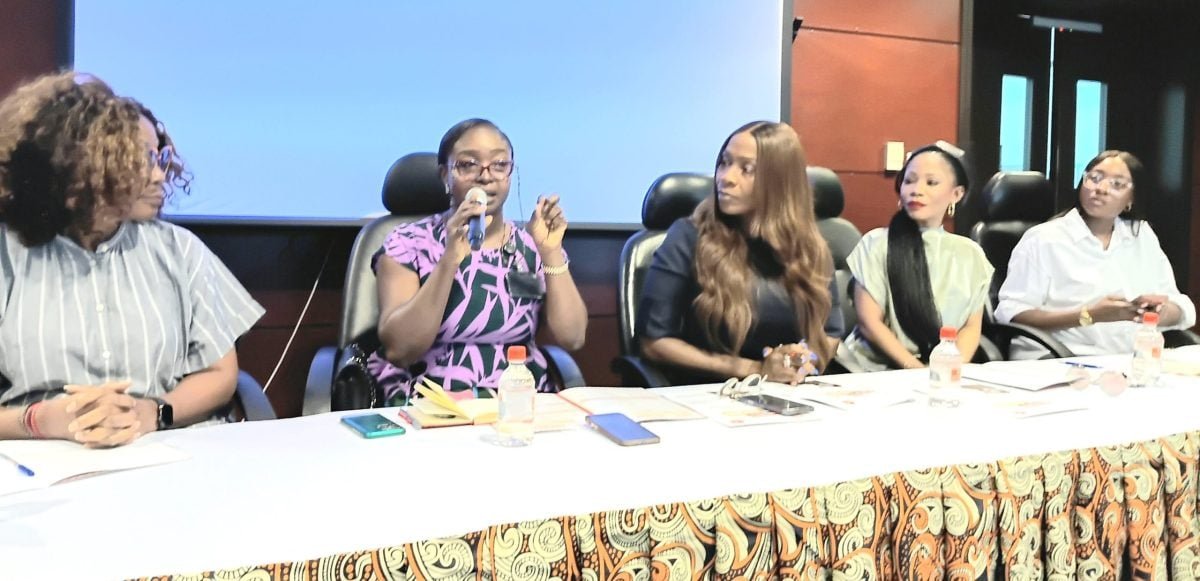
As preparations ramp up for the 16th annual GTCO Autism Conference, stakeholders and behavioural experts are calling for a massive cultural shift in how society treats neurodivergent individuals.
Moving away from the elementary stage of mere “awareness,” this year’s convention—themed “Acceptance in Action”—demands tangible, everyday changes from families, schools, workplaces, and the general public.
Organizers argue that while previous advocacy campaigns successfully introduced the public to autism, true inclusion remains heavily restricted by societal stigma and deep-rooted cultural misconceptions.
For many, the word “acceptance” feels abstract or overly academic. However, speaking to journalists on Wednesday at the bank’s headquarters in Lagos, Oyinade Adegite, Chief Communication Officer at Guaranty Trust Holding Company (GTCO), clarified that true acceptance is rooted in simple, accessible human empathy.
In a tough economic environment where citizens are often locked in a grueling survival mindset, Adegite noted that people can lose touch with their core humanity. She views the upcoming conference as a vital invitation to reclaim that empathy.
“Acceptance is not a big word; it might just mean creating space,” Adegite explained. “It might just mean going to places and hearing a child screaming or making noise, and you’re not flustered. It’s you bringing composure into that situation so the parents feel comfortable, like they are not an additional burden under your staring eyes.”
Adegite stressed that moving forward requires a conscious transition from reactive judgment to deliberate, supportive responses.
She underscored the impact of the bank’s annual social intervention initiative, noting that since its inception 16 years ago, the GTCO Autism Programme has evolved into a crucial platform for education, intervention, and community engagement across West Africa.
The 2026 theme emphasizes the importance of moving beyond awareness to taking concrete actions that promote accessibility and sustained support across families, schools, workplaces, and public spaces.
ALSO READ: Trump writes Tinubu, lauds efforts in tackling violence against Christians
Just like previous editions, the 2026 Autism Programme, tagged “Orange Ribbon Initiative,” will feature leading global and local experts, panel discussions, performances, and interactive sessions.
The programme serves as a safe environment where caregivers, families, and professionals can share insights, build networks, and access tools for effective advocacy.
The conference will hold on July 27 and 28 at the MUSON Centre, Lagos. Following the main event, free one-on-one family consultations with medical and developmental specialists will take place from July 29 to August 1 at the Adeyemi Bero Auditorium, Alausa Secretariat, Ikeja, offering practical support and care for people living on the spectrum.
Reflecting on the journey, Adegite added: “We began this journey with a singular objective—to bring autism out of the shadows and help families find hope and support. Sixteen years on, we are proud of the community we’ve built and the progress we’ve made together. Real change requires deliberate action—action that transforms lives, empowers families, and creates real opportunities for individuals with autism to realize their fullest potential.
“At GTCO, we believe in the power of inclusion. By working together—parents, educators, media practitioners, advocates, and caregivers—we can advance a future where everyone is seen, supported, and celebrated. That is our collective dream, and we want everyone—at individual, corporate, or government levels—to go on the journey with us.”
In their separate contributions, prominent behavioural analysts and caregivers Mrs. Solape Azazi, Dr. Eziafakaku Nwokolo, and Osezusi Bolodeoku applauded GTCO for consistently organising the impactful annual conference.
They pointed out that while biomedical and psychological therapies provide essential support for individuals on the spectrum, the real battleground for inclusion lies within local communities.
They highlighted that despite extensive historical efforts in spreading awareness, public stigmatization remains rampant, revealing a lingering lack of fundamental understanding about neurodevelopmental disorders.
According to them, inclusion cannot just be a trendy buzzword; it requires immediate, grassroots mobilization.
“That is why true inclusion is measured by actions, not declarations,” Dr. Nwokolo declared. “Meaning that people with knowledge must actively go into communities to advocate, support, and care for families. The onus is on each and every one of us—everyone in the community, the government, and just everybody. We need to make them feel seen.”
The shift toward actionable acceptance must also penetrate the private walls of the family unit.
Speaking in the same vein, Azazi revealed that public stigma is frequently fueled by a lack of deep conceptual understanding, which often forces parents into an immediate, isolated survival mode.
When a child receives a diagnosis, parents frequently run “from pillar to post,” drowning in panic and accidentally overlooking the human being in front of them.
Azazi insists that true acceptance inside the home begins when families completely eliminate self-blame and spiritual superstitions.
“What acceptance in a family means is to see that child first before the diagnosis,” Azazi stated. “This is my child. I will love my child unconditionally. The way you present that love outwardly is what your neighbour will see, sparking a healthy curiosity instead of judgment.”
When parents confidently display unconditional love in public, it opens the door to vital educational conversations. Azazi provided a practical roadmap for how one family’s acceptance creates a cascading effect through Nigerian society.
This includes public awareness whereby a child exhibits a self-regulating behavior (like spinning) in public and, instead of hiding in shame, the educated parent calmly explains to onlookers that the behavior is simply a tool used for sensory regulation.
Through this interaction, the observer moves from just knowing a clinical word to genuinely understanding a human concept.
The enlightened neighbour takes that knowledge to their local church or community group, actively debunking myths that autism is a “spiritual issue.”
WATCH TOP VIDEOS FROM NIGERIAN TRIBUNE TV