

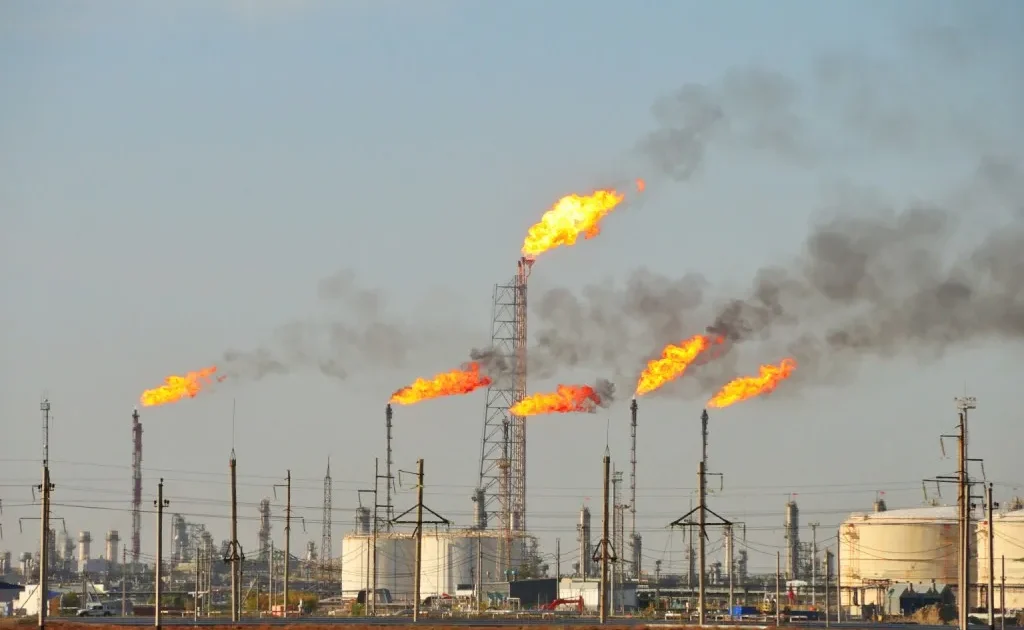
Germany has unveiled a new programme to help Nigeria tackle the estimated $1.5bn it loses annually to gas flaring by converting the wasted gas into economic value.
The German Ambassador to Nigeria, Annett Günther, disclosed this at the just-concluded Nigeria Oil and Gas Conference in Abuja, saying the initiative would support Nigeria’s energy transition while reducing emissions and creating new economic opportunities.
She said the project, commissioned by the German Foreign Office, would explore ways to utilise gas currently flared across Nigeria for domestic consumption, industrial use and hydrogen production.
Giving the rationale for the intervention, Günther said Nigeria remained one of the world’s biggest gas-flaring countries.
She said, “So, I think most recently the German Foreign Office commissioned a programme to translate our energy partnership into practice in an area with a new project looking closely into flared gas and how it can be put into economic value. Just for context, 5.3 billion cubic metres of gas flared in 2024 in Nigeria, which makes it the seventh-ranked in the world, and that equals an economic loss of 1.5 billion US dollars.
“So, this new programme now is to work together and find out how to utilise those flared gases more efficiently, bring down emissions, generate additional value, and use the gas to supply households and industry or even maybe to produce hydrogen.”
The ambassador said the initiative forms part of the long-standing energy partnership between Germany and Nigeria, which has evolved through several programmes designed to support the country’s Energy Transition Plan.
According to her, the collaboration covers low-carbon power generation, hydrogen development, natural gas infrastructure and climate action.
“There are three aspects to it, and one is low-carbon energy power generation, where we want to work on photovoltaic, low-carbon hydrogen, e-hydrogen, natural gas infrastructure, and commitment to global climate goals. Nigeria wants to go net zero in 2060. Germany wants to go net zero in 2045, so a bit earlier, and that’s why we are very keen to work together with Nigeria to build those cleaner carriers of energy,” she stated.
Günther said the global energy landscape had made cooperation between both countries increasingly important.
“Cooperation is very important, and it’s a real big market, and you know with all the global disruptions that we have seen in the Middle East, everybody wants to diversify because you never know what’s going to happen next, and that’s why even both Germany and this corporation are very important also for our companies,” the diplomat added.
She also announced a skills development initiative, revealing that the GIZ programme, in collaboration with Siemens Energy and the European Union, had begun training 6,000 Nigerian energy professionals.
“The GIZ programme is now connected with Siemens Energy and the EU programme, and they have started a programme to train 6,000 Nigerian energy professionals to work off-grid across the energy sector in Nigeria.
“So, because you can only develop an industry if you have a skilled workforce at the same time. So, implementing the Presidential Power Initiative is one thing, but getting the skilled workforce is another aspect,” she disclosed.
Speaking on broader cooperation, Günther said Germany and Nigeria had established a framework to accelerate energy transition, climate financing, technology transfer and renewable energy investment.
“It commits both our governments, the Nigerian and the German governments, to work together in implementing Nigeria’s energy transition plan, facilitating multi-stakeholder implementation, and also coordinating across Nigerian ministries, because we know there are quite a number of ministries involved, from petrol to gas to power to environment, you name them.
“For instance, Nigeria and Germany are the co-chairs in the Green Guarantee Group, which is a mechanism to identify financing for green energy investments,” she explained.
The ambassador said Germany’s Hydrogen Office in Nigeria would continue to provide technical expertise, policy dialogue and knowledge transfer to support Nigeria’s low-carbon hydrogen development and broader energy transition priorities.