

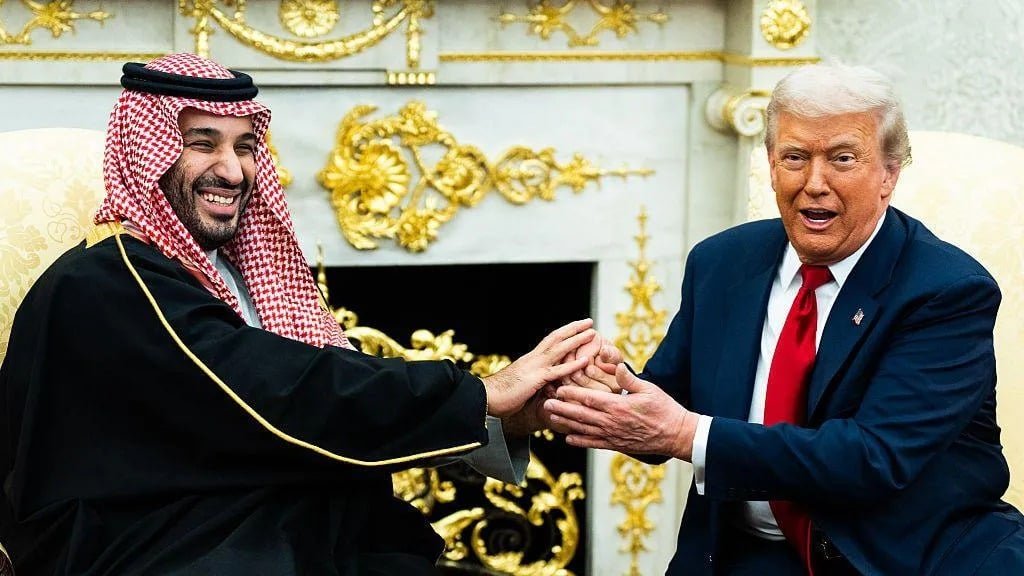
The United States is expected to announce a landmark agreement allowing Saudi Arabia to develop a civilian nuclear programme, marking a major step in the two countries’ strategic partnership while raising fresh concerns about nuclear proliferation in the Middle East.
According to multiple U.S. media reports, President Donald Trump’s administration is set to unveil the deal on Wednesday after months of negotiations with the Gulf kingdom.
If approved, the agreement could be worth billions of dollars for U.S. companies, which are expected to play a central role in designing and building Saudi Arabia’s nuclear infrastructure, including a facility capable of producing enriched uranium for civilian energy use.
Under the proposed agreement, Saudi Arabia would work with the United States on a joint study to determine whether uranium enrichment could take place inside the kingdom. If approved, the fuel would be produced at a U.S.-built enrichment facility for use in civilian nuclear power plants.
The proposal differs significantly from a 2009 agreement between the United States and the United Arab Emirates, under which the UAE agreed not to enrich uranium domestically and instead relied on imported nuclear fuel.
The reported agreement has drawn particular attention in Israel, one of Washington’s closest allies in the Middle East. Israeli nuclear experts and former officials have expressed concern that the technology could, in the future, provide Saudi Arabia with the capability to develop nuclear weapons if political circumstances change.
ALSO READ: Trump writes Tinubu, lauds efforts in tackling violence against Christians
The announcement also comes months after heightened tensions involving Iran’s nuclear programme. The United States and Israel have repeatedly argued that preventing Iran from obtaining a nuclear weapon remains a top security priority, although Tehran insists its nuclear programme is intended solely for peaceful purposes.
Saudi Crown Prince Mohammed bin Salman has previously said the kingdom does not seek nuclear weapons. However, in a 2018 interview with CBS News, he warned that Saudi Arabia would move quickly to develop one if Iran successfully acquired a nuclear bomb.
According to reports, the proposed agreement would remain in force for 30 years. It also includes safeguards intended to limit Saudi Arabia’s nuclear activities.
If a joint U.S.-Saudi study concludes that uranium enrichment should not proceed inside the kingdom, Saudi Arabia would reportedly be prohibited from pursuing enrichment independently or with another foreign partner for the following 10 years.
The deal is expected to be submitted to the U.S. Congress, where it could face scrutiny from lawmakers in both parties despite Republicans controlling both chambers.
Notably, the agreement is not reported to require Saudi Arabia to establish diplomatic relations with Israel, a condition that previous U.S. administrations had hoped to secure as part of broader efforts to normalise ties between Israel and Arab states.
If finalised, the agreement would represent one of the most significant nuclear cooperation deals negotiated by the Trump administration and could reshape the geopolitical landscape of the Middle East for decades, even as debates continue over balancing energy development with regional security concerns.
(BBC News)
WATCH TOP VIDEOS FROM NIGERIAN TRIBUNE TV