

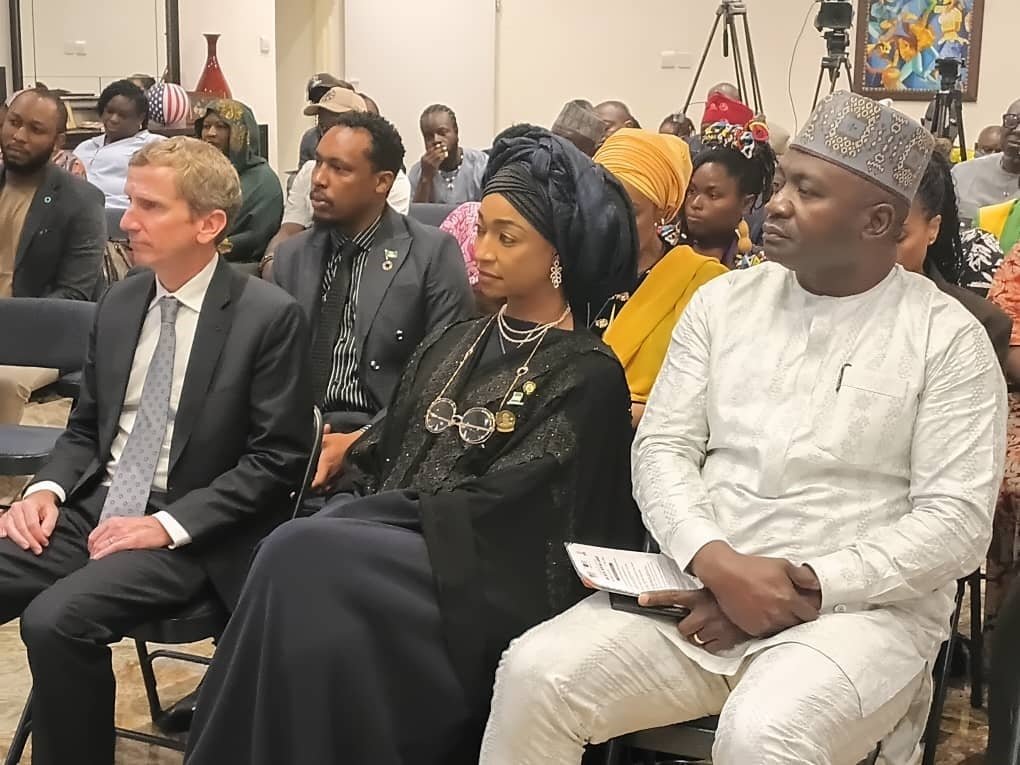
The Federal Government, in partnership with the United States Embassy and the Wheyham Report Foundation, on Tuesday unveiled an immersive digital heritage platform designed to preserve Nigeria’s ancient Nok civilisation, with more than 250 artefacts digitally catalogued and protected against illicit trafficking.
The project, launched in Abuja, also featured the premiere of the documentary Nok Culture: History, Art and Civilization and was implemented under the US Ambassadors Fund for Cultural Preservation.
Speaking at the event, the Chargé d’Affaires of the US Embassy, Keith Heffern, said the initiative demonstrated how technology could strengthen cultural preservation while tackling the illegal trafficking of heritage objects.
According to him, the project has digitally preserved more than 250 Nok artefacts, upgraded the Nok Museum, trained 50 Nigerian youths in advanced digital preservation skills and reached over 50,000 people across the country.
“The results speak for themselves: over 250 Nok artifacts digitally preserved, a fully upgraded museum, 50 Nigerian youth trained in cutting-edge digital skills, and 50,000 people reached nationwide. Built predominantly with American technology, this platform delivers real investment, measurable results and lasting impact,” Heffern said.
He explained that the platform incorporates Non-Fungible Token (NFT)-based tracking technology to improve authentication and traceability of artefacts, describing it as a tool for disrupting the multi-billion-dollar illicit trafficking of cultural property while strengthening law enforcement cooperation between Nigeria and the United States.
Heffern disclosed that the United States had invested about $1.2 million over the past five years in cultural heritage preservation projects across 21 Nigerian states through the Ambassadors Fund for Cultural Preservation.
“A strong, secure Nigeria is good for America. When Nigeria’s heritage is protected, criminal networks are disrupted and the foundation for prosperity, for both our nations, is secured,” he said.
ALSO READ: We’ll talk to terrorists to end insecurity — Kwankwaso
The Minister of Arts, Culture, Tourism and Creative Economy, Hannatu Musa Musawa, said the project fulfilled part of the grant agreement signed between the ministry and the US Embassy in February 2025 to document and preserve the Nok terracotta artefacts of Kaduna State.
She described the Nok civilisation as one of Africa’s earliest and most sophisticated producers of terracotta art, noting that the initiative would make the country’s cultural assets accessible to people beyond museum walls.
“What we see this morning is a component of that project delivered,” Musawa said.
She stressed that digital preservation complements, rather than replaces, physical conservation by ensuring cultural records remain available even when artefacts themselves are threatened.
“It does not replace the physical work of guarding a site or conserving an object. It makes sure that work reaches people who will never visit Kaduna State, and that the record survives even where the objects themselves are at risk,” she said.
The minister added that the ministry intends to replicate the digital preservation model for other tangible and intangible cultural heritage across Nigeria, while commending the US government for more than two decades of support for heritage conservation projects, including Sukur, Osun-Osogbo and now the Nok cultural landscape.
Earlier, the Project Lead of the Wheyham Report Foundation, Barr. Yahaya Maikori, said the initiative was conceived to preserve, protect and promote Nigeria’s cultural heritage through innovation, digital technology and community participation.
He said the project had catalogued 250 Nok artefacts, introduced digital documentation and tracking systems, refurbished the Nok Museum, engaged young Nigerians in heritage documentation, developed immersive digital experiences and produced a documentary on the Nok civilisation.
“The project has shown that cultural preservation can serve as a platform for unity, identity and sustainable development,” Maikori said.
He said the foundation would continue to pursue deeper archaeological research on the Nok civilisation, expand the digital platform to document certified Nok artefacts globally and advocate for the establishment of a dedicated modern Nok Museum to house repatriated artefacts and promote cultural tourism.
Maikori acknowledged the support of the US Embassy, the National Commission for Museums and Monuments, Yale University and the Ham community, describing the partnership as vital to preserving one of Africa’s oldest civilisations.
Also speaking, the Chief of Defence Staff, General Christopher Musa, described the preservation of Nigeria’s cultural heritage as a critical pillar of national security, saying Nigeria must protect its history with the same commitment it devotes to defending its territorial integrity.
Musa, who said he hails from Zangon Kataf in Southern Kaduna, noted that the area forms part of the cultural landscape of the Nok civilisation and expressed pride in being associated with one of Africa’s earliest civilisations.
“Today is about much more than the premiere of a documentary. It is about preserving a story that belongs not only to a region, but to our entire nation, and indeed, the entire world,” he said.
He commended the Wheyham Report Foundation, the US Embassy, Yale University and the National Commission for Museums and Monuments for combining documentary filmmaking, scholarship and advanced technology to preserve Nigeria’s cultural heritage.
The defence chief observed that although the first Nok terracotta was discovered in 1928 and transformed global understanding of Africa’s history, many Nigerians remain unaware of the civilisation’s significance.
“The people of Nok mastered iron technology and produced artistic works of extraordinary sophistication thousands of years ago. Yet, despite this extraordinary legacy, too many Nigerians know little about it. Forums like this offer us the opportunity to change that,” he said.
Musa lamented the declining emphasis on history education in Nigeria, describing it as one of the country’s greatest mistakes.
“If you don’t know your past, your future is lost in history. Our kids must know the history that will help guide them, help them know who they are and why they are where they are. I think that is very critical,” he said.
He urged greater investment in museums, historical monuments and infrastructure around the Nok cultural landscape to encourage Nigerians to appreciate and take ownership of their heritage.
“You go to other countries and you see so many museums. Our kids are growing up and they don’t know all these things. Most of them know places abroad, but home, empty. That is one critical area that we need to look at,” he added.
Musa also argued that safeguarding Nigeria’s cultural heritage is an important non-military component of national security.
“As Chief of Defence Staff, my primary concern is to help safeguard our nation’s sovereignty, territorial integrity and the security of our people. But over the years, I have come to appreciate that national security is about much more than military strength.
“Our history, our culture and our shared heritage construct national identity. They build confidence in our people, foster unity across our diversity and cultivate values that hold us together in times of stress. In that sense, preserving our cultural heritage is also an investment in national security. It is a key pillar of national cohesion,” he said.
The Chief of Defence Staff praised the deployment of augmented reality and virtual reality technologies in the Nok heritage project, saying they would make Nigeria’s history more accessible to young people across the country and in the diaspora.
“Technology now makes it possible to experience the richness of our nation’s history in ways that previous generations could hardly have imagined. This is exactly the kind of innovation we should encourage because preserving our heritage in the 21st century requires us to embrace both traditional conservation and modern technology,” he said.
He also stressed the need to protect Nigeria’s cultural assets from theft, illicit trafficking, vandalism and neglect.
“These priceless artefacts are not merely objects of historical interest; they are part of our national identity and must be preserved for generations yet unborn,” he said.
Addressing young Nigerians, Musa urged them to draw inspiration from the achievements of the Nok civilisation.
“Your forebears were inventors, artists and skilled metallurgists whose accomplishments earned global recognition. Let that heritage inspire confidence in your own ability to contribute to Nigeria’s future,” he said.
He called for stronger partnerships between government, development partners and cultural institutions, saying the story of the Nok civilisation demonstrates that “greatness has long been part of our heritage and that we have every reason to face the future with confidence and pride.”
WATCH TOP VIDEOS FROM NIGERIAN TRIBUNE TV