

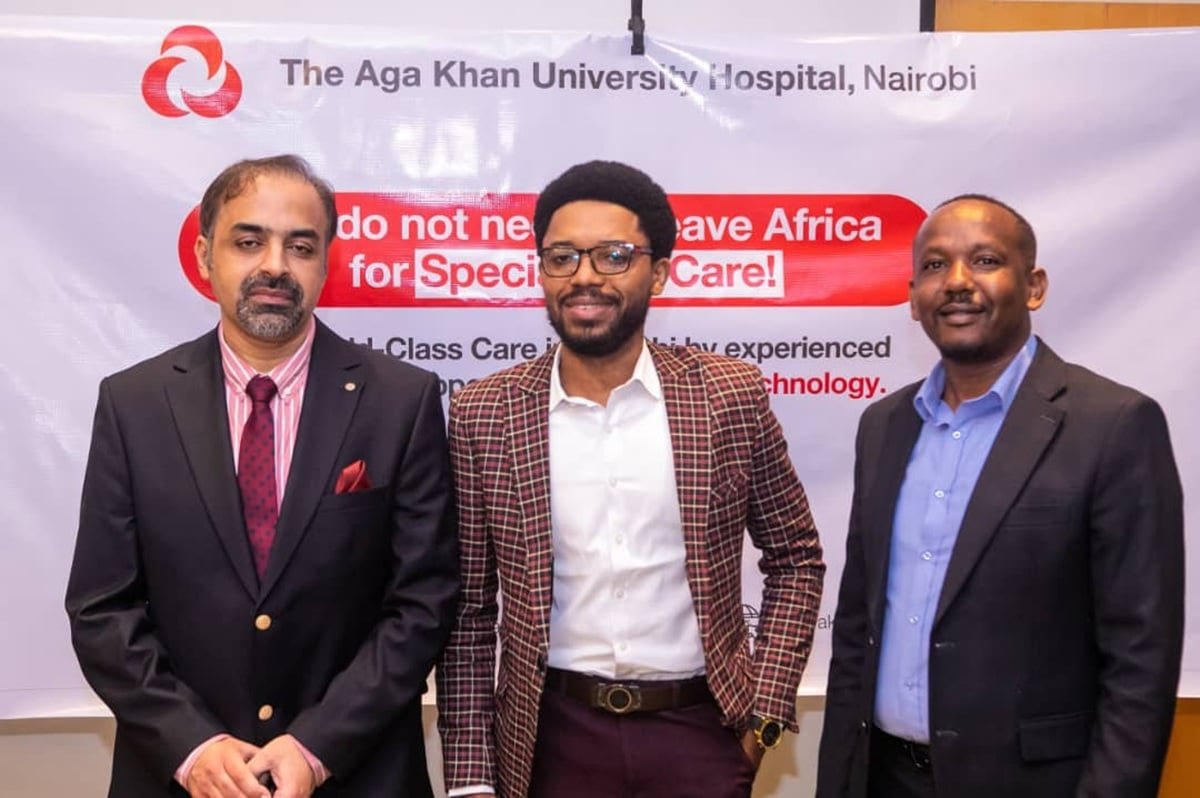
Aga Khan University Hospital (AKUH), Nairobi, has called for increased investment in specialist healthcare, medical research and medical education across Africa, warning that the continent loses an estimated $7 billion annually to outbound medical tourism.
Speaking at a media roundtable in Lagos on Tuesday, the hospital’s Chief Operating Officer, Khurram Jamal, said Africa has the expertise and resources to build world-class healthcare systems capable of reducing dependence on treatment in Europe, Asia and the Middle East.
According to him, more than 300,000 Africans travel to India every year for medical care, resulting in massive capital flight and weakening confidence in the continent’s healthcare systems.
“Africa has the expertise and the opportunity to build health systems that people can trust,” Jamal said.
“Our responsibility is to invest in quality, people, research and partnerships that keep both patients and healthcare investment on the continent.”
He stressed that internationally recognised accreditation should be viewed not as a symbol of prestige but as a framework for delivering safe, consistent and evidence-based healthcare.
Jamal said improving healthcare quality is essential to reversing medical tourism and the migration of skilled healthcare professionals from Africa.
He cited World Health Organisation estimates showing that Africa has only 1.5 healthcare workers per 1,000 people, compared to the recommended 4.45 per 1,000, adding that nearly 70 per cent of African doctors who travel abroad for specialist training never return.
“The tragedy is that we are effectively outsourcing our medical education while permanently losing some of our brightest medical minds,” he said, adding that investment in specialist training is more important than infrastructure alone because “a building cannot heal a patient.”
Jamal also called for greater investment in clinical research, noting that although Africa accounts for 17 per cent of the world’s population and 25 per cent of the global disease burden, it contributes only about four per cent of global clinical trials.
He said the COVID-19 pandemic exposed Africa’s dependence on foreign-developed vaccines and underscored the need to strengthen local research institutions capable of developing vaccines and therapies.
According to him, AKUH has participated in 17 clinical research projects since 2020, with three contributing to therapies now approved for use in Kenya.
Also speaking, the hospital’s Manager of Marketing and Communications, Anthony Kagiri, said the institution has grown into one of East Africa’s leading university teaching hospitals, operating a 300-bed tertiary facility and 54 outreach medical centres across Kenya and Uganda.
He said 25 to 30 per cent of patients treated at the Nairobi hospital come from outside East Africa, including Nigeria and several Central African countries.
Kagiri said the hospital is promoting regional collaboration by encouraging African countries to develop centres of excellence where patients can access specialised care within the continent rather than travelling overseas.
He disclosed that AKUH has partnered with Kenya Airways to simplify medical travel through pre-travel teleconsultations, coordinated patient transfers, subsidised travel for eligible patients and post-treatment follow-up with local physicians.
He added that the hospital currently runs residency programmes in nine medical specialities and 16 fellowship programmes, supported by more than 200 full-time specialists, to help train the next generation of African healthcare professionals.
Jamal maintained that Africa’s future lies in building trusted institutions capable of delivering world-class healthcare, producing African-led research and retaining the continent’s best medical talent.
WATCH TOP VIDEOS FROM NIGERIAN TRIBUNE TV