

Nigeria’s latest standing in the IMD World Competitiveness Ranking 2026 is not just another global scorecard. It is a structural signal about how the economy is being rebuilt and where the country now sits in the global economic hierarchy.
The most important insight from the report is simple. On IMD’s sub‑indicators, Nigeria ranks 16th in public finance and 15th in tax policy. These are positions typically associated with the performance of many top twenty economies on those specific dimensions. They show that Nigeria’s fiscal architecture has reached a level of credibility that global institutions can no longer ignore.
IMD measures the hard wiring of an economy. It assesses public finance, tax systems, economic activity, trade flows and investment climate, and then aggregates these into an overall competitiveness ranking. Within this framework, Nigeria’s economic performance pillar stands at 55th globally with a score of 45.2, the highest in Africa. Nigeria outperforms South Africa by almost nine points and the lowest ranked African peer by nearly twenty seven. For investors and the diaspora, these margins matter. They indicate that Nigeria’s economic activity and fiscal management are now outpacing regional peers in a way that should reshape how capital views the country.
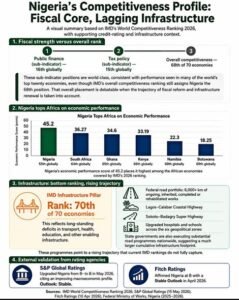
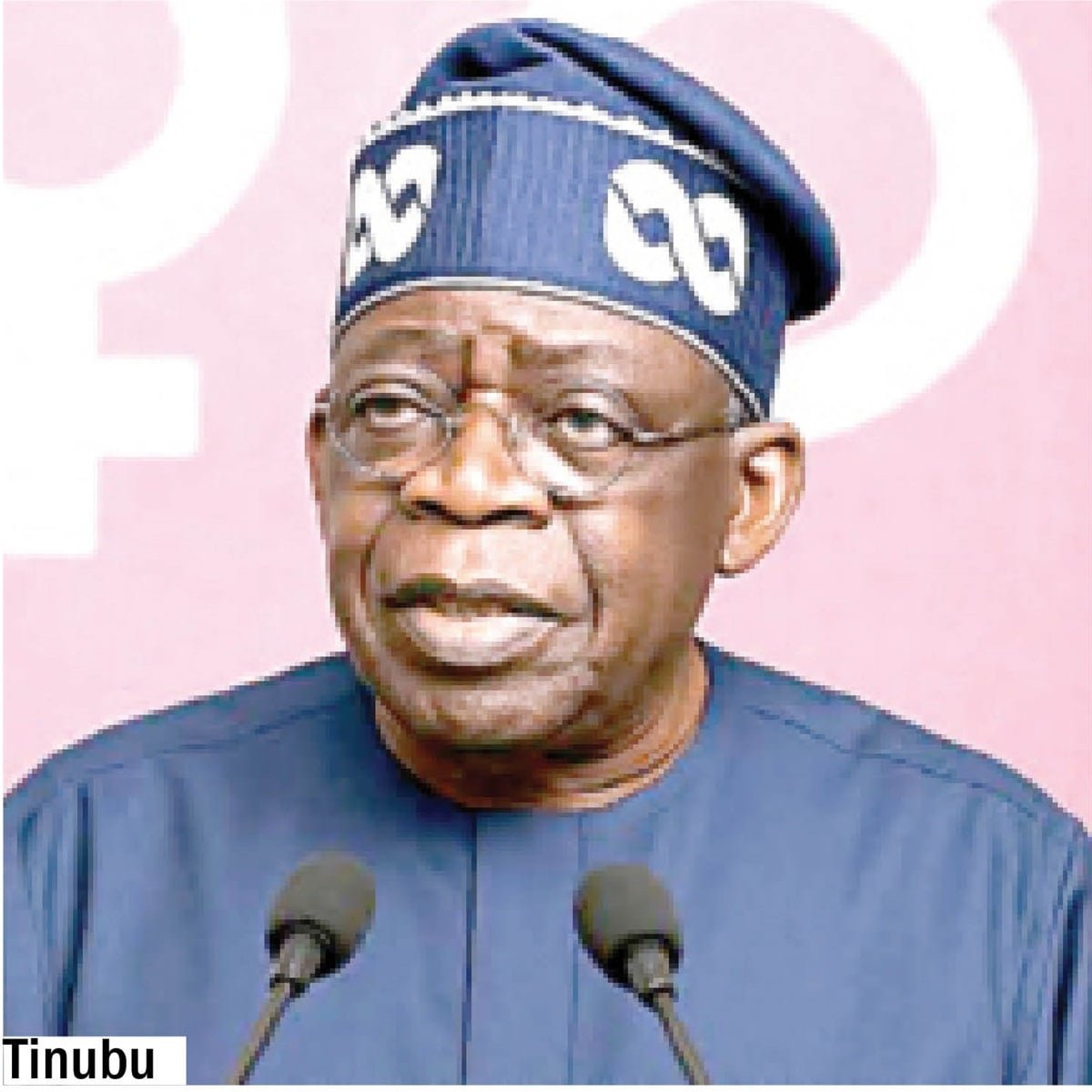
The fiscal story is therefore clear. Nigeria’s reforms under the leadership of President Bola Tinubu are no longer domestic experiments. They have gained international traction. Ranking 16th in public finance on a global sub‑indicator is not a regional achievement. It is a global one. Ranking 15th in tax policy within a worldwide benchmark is not a footnote. It is a reference point. Combined with S&P’s recent upgrade of Nigeria’s sovereign rating from B minus to B and Fitch’s affirmation of Nigeria at B with a stable outlook, the evidence supports a turnaround thesis. Nigeria has shifted from fiscal disorder to emerging macro discipline.
This is why the claim that Nigeria now has the fiscal architecture of a top twenty economy in public finance and tax policy is not rhetorical. It is a data anchored description of the country’s new macro posture on these critical sub‑indicators. The fiscal and revenue systems are now increasingly aligned with global standards. The remaining work lies in extending that same level of seriousness to institutions, business efficiency and access to finance so that overall competitiveness can catch up with the strength of the fiscal core.
It is in infrastructure that the IMD report becomes internally contradictory. The same index that credits Nigeria with world class performance in public finance and tax policy also places the country near the bottom of global infrastructure rankings. That contradiction deserves to be challenged. If a country is ranked among the global top twenty in public finance and tax policy sub‑indicators and is investing heavily in physical projects, it should not simultaneously be portrayed as one of the worst performers in infrastructure delivery without a more nuanced explanation. Fiscal strength and infrastructure outcomes are linked. A country cannot build credible fiscal systems without also building the capacity to deliver physical projects. Nigeria has moved on both fronts.
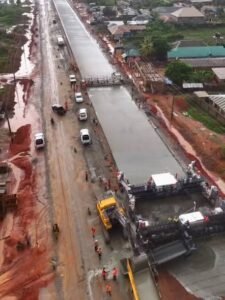
The report’s infrastructure score does not align with observable reality on the ground. There is no credible basis for claiming that Nigeria’s infrastructure outcomes today are worse than they were before May 29, 2023 when viewed through current project pipelines and delivery. The scale of infrastructure renewal since then has been unprecedented at both federal and state levels. The federal government has launched hundreds of road projects, opened new corridors, accelerated long delayed highways and expanded strategic intercity links. State governments from Lagos to Kano to Enugu to Rivers to Kwara have executed aggressive urban renewal, transport expansion and regional connectivity programmes. Nigeria’s infrastructure trajectory is rising, not falling.
This discrepancy matters because competitiveness rankings must reflect real world progress, not only legacy deficits. Nigeria’s infrastructure surge is visible, measurable and transformative in lived experience. It is reshaping mobility, logistics and national connectivity. Any global index that fails to capture this shift risks reinforcing outdated narratives rather than reporting current outcomes. Nigeria’s fiscal architecture is now performing at global best practice levels in key sub‑indicators. Its infrastructure delivery is accelerating through large scale road, health and education investments. Global measurement needs to catch up with the facts and incorporate trajectory, not just stock.
The IMD report should therefore be read as a trajectory document rather than a static league table. It shows an economy expanding faster than its regional peers on economic activity. It shows fiscal and tax reforms earning global recognition in specific dimensions. It also shows that Nigeria’s bottlenecks are specific and solvable. Infrastructure, institutional quality, business environment and access to finance are already being targeted by ongoing reforms and investment programmes.
This reframes the national conversation. Nigeria is not a failing economy. It is a mid transition economy. Strong at its fiscal core, but uneven in its delivery systems. Near world class in selected elements of fiscal architecture, but still climbing in infrastructure and institutional performance. Investors understand transition economies. What they need is clarity on direction. The IMD data, in part, provides that clarity, while the lived reality of ongoing infrastructure renewal completes the picture.
For the diaspora, the implications are significant. Remittances follow confidence. Nigeria’s outperformance of South Africa, Ghana, Kenya, Namibia and Botswana on economic activity metrics should reshape how Nigerians abroad evaluate opportunity. The country’s macro foundations are no longer fragile. They are strengthening and being matched by visible infrastructure investment.
The turnaround thesis is straightforward. Nigeria has built the fiscal architecture of a top twenty economy in public finance and tax policy sub‑indicators. The next chapter is about building world class delivery systems to match that performance in physical infrastructure and institutions. If the country sustains its current trajectory, the competitiveness story will shift from potential to performance. Nigeria has proved it can build credible fiscal systems. The question now is how quickly it can expand the infrastructure and institutional muscle to unlock the full power of those systems.
Postscript. The immediate past Minister of Finance and Coordinating Minister of the Economy, Mr Wale Edun, deserves commendation for his part in the fiscal turnaround story. Similarly, Mr Taiwo Oyedele, as the key architect of recent tax policy reforms, earned the nation’s applause for midwifing a new tax framework that repositioned the country for stability and comprehensive growth.
#Nigeria
#ranking
#Tinubu
#RenewedHope