

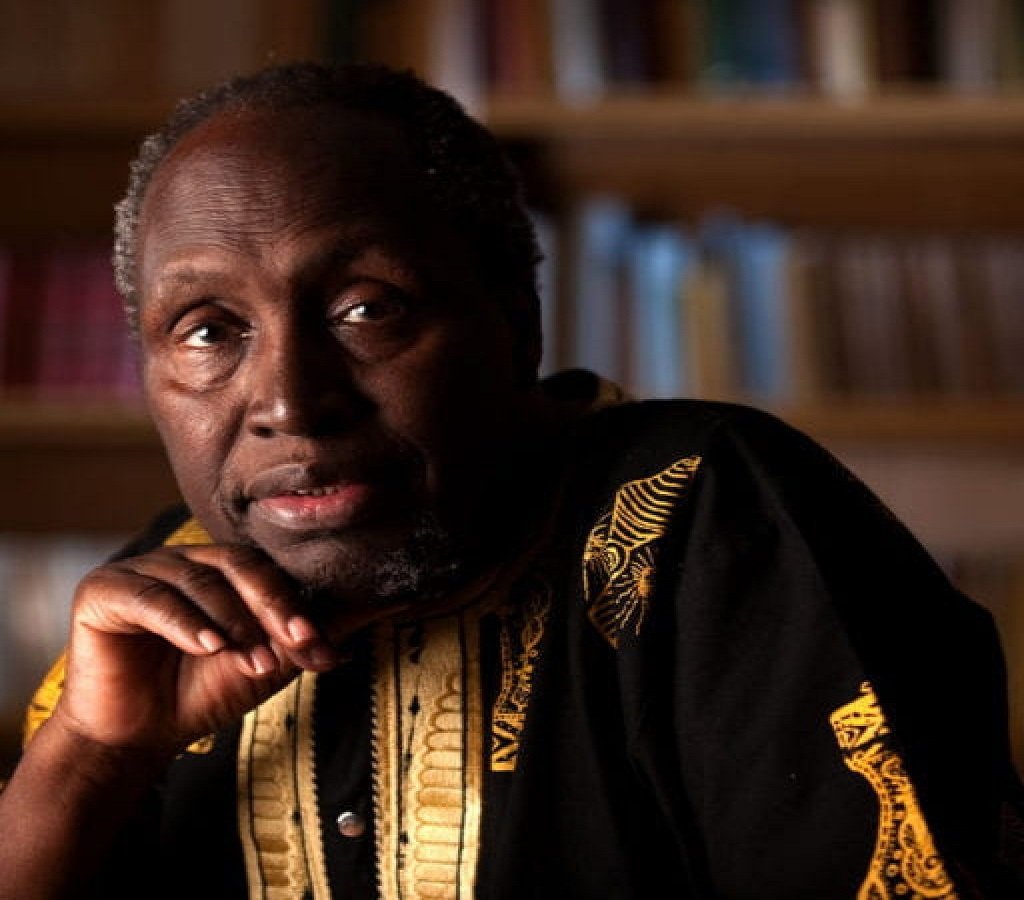
A record-breaking global audience of 3.7 million people across 24 countries joined an illustrious panel on Sunday in a powerful, emotionally charged tribute to the legendary Kenyan writer and thinker, Ngũgĩ wa Thiong’o. The event, hosted by The Toyin Falola Interviews, united voices from literature, academia, and activism to honour Ngũgĩ’s revolutionary journey as a writer, teacher, and ideological beacon of African liberation.
Chaired by the eminent historian and global intellectual, Professor Toyin Falola, the session drew together some of the most respected scholars and writers of African descent, including Professor Ato Quayson of Stanford University, Professor Abiodun Salawu of the University of North-West, Professor James Ogude of the University of Pretoria, Professor Peter Amuka of Moi University, Dr. Mercy Mirembe Ntangaare of Macquarie University, celebrated novelist and memoirist Okey Ndibe, and Monica Cheru Mpambawashe of the Pan-African Writers Association.
In an opening reflection filled with reverence and literary insight, Professor Ato Quayson recalled, “I was introduced to Ngũgĩ wa Thiong’o’s writing as an undergraduate at the University of Ghana. A Grain of Wheat had a major impact on me… It’s essential to remember: Ngũgĩ is first and foremost a literary writer.” Quayson emphasized that while Ngũgĩ’s political essays like Decolonising the Mind have become foundational texts, his early fiction remains deeply moving, shaped by the lives of ordinary people grappling with colonial and historical forces.
Professor Peter Amuka, who studied under Ngũgĩ and later completed his doctoral thesis on him, shared a humorous yet poignant memory: “I first encountered Ngũgĩ in writing — in 1966. What struck us was that we were told he was a living writer. That surprised us. We thought all writers were dead!” He described the profound influence Ngũgĩ had on students by exposing them to global Black literatures, and how Ngũgĩ’s worldview was shaped by a spiritual understanding of land—an idea resonating from Jomo Kenyatta’s Facing Mount Kenya.
Equally powerful was the impassioned voice of Monica Cheru Mpambawashe, who issued a call to arms to African storytellers: “To my fellow writers and storytellers, Ngugi has left us a task: to amplify these demands… We don’t need more dialogue about poverty in Africa. We need stories that refuse the donor script and demand reparations. Our keyboards are not for social media only. They are spears. Let’s wield them like Ngũgĩ did — without apology, without fear.”
For Professor James Ogude, the personal and political were inseparable in Ngũgĩ’s journey. Reflecting on their first meeting at the University of Nairobi, he recalled, “My relationship with Ngũgĩ goes way back into the ’70s… You’re caught up in this tumultuous time, a very difficult time, where you had to make choices—serious political choices—of what you had to study.” He described the momentous historical backdrop—assassinations, military coups, and student activism—that framed Ngũgĩ’s radical turn.
Ogude further noted the ideological evolution of Ngũgĩ: “People often think Ngũgĩ is a pedantic ideologue who doesn’t change. But he does. In the revised edition of The River Between, the circumcision scene has been excised. That awareness… especially with gender influence and awareness… led Ngũgĩ to revise.”
He emphasized that the trauma of land dispossession lies at the heart of Ngũgĩ’s literary imagination: “As Fanon reminds us, for colonized people, the most essential, most concrete thing is land—not just because of dispossession, but because land is livelihood. It gives dignity… The literary imagination of land in Ngũgĩ’s work is central to recovery, to historical myth-making, to ecological liberation of Africa’s space.”
Though unable to attend in person, Professor Abiodun Salawu sent in a message commending Ngũgĩ’s radicalism and unrelenting critique of linguistic imperialism. “Ngũgĩ’s insistence on writing in his native Kikuyu and the language of his people is a revolutionary act that challenges the foundation of epistemic dominance,” he stated.
From the diaspora, Nigerian-American writer Okey Ndibe paid a glowing tribute to Ngũgĩ’s courage and clarity of purpose: “Ngũgĩ was — and since he’s a writer, he is — one of the most courageous literary minds of our time. He’s never hidden behind fiction to mask his positions. Every sentence he writes dares to liberate someone.”
Dr. Mercy Mirembe Ntangaare, known for her theatrical work, reflected on Ngũgĩ’s legacy in drama and education: “He taught us that theatre was not just entertainment. It was an act of revolution. It was about reclaiming language, space, and memory.”
As Professor Falola noted, “Ngũgĩ is not just a writer. He is a world-maker. He imagined Africa into dignity, and he imagined it in the tongues of its ancestors.”
For over three hours, viewers across the globe engaged with this rich tapestry of memories, tributes, and provocations.
ALSO READ TOP STORIES FROM NIGERIAN TRIBUNE